

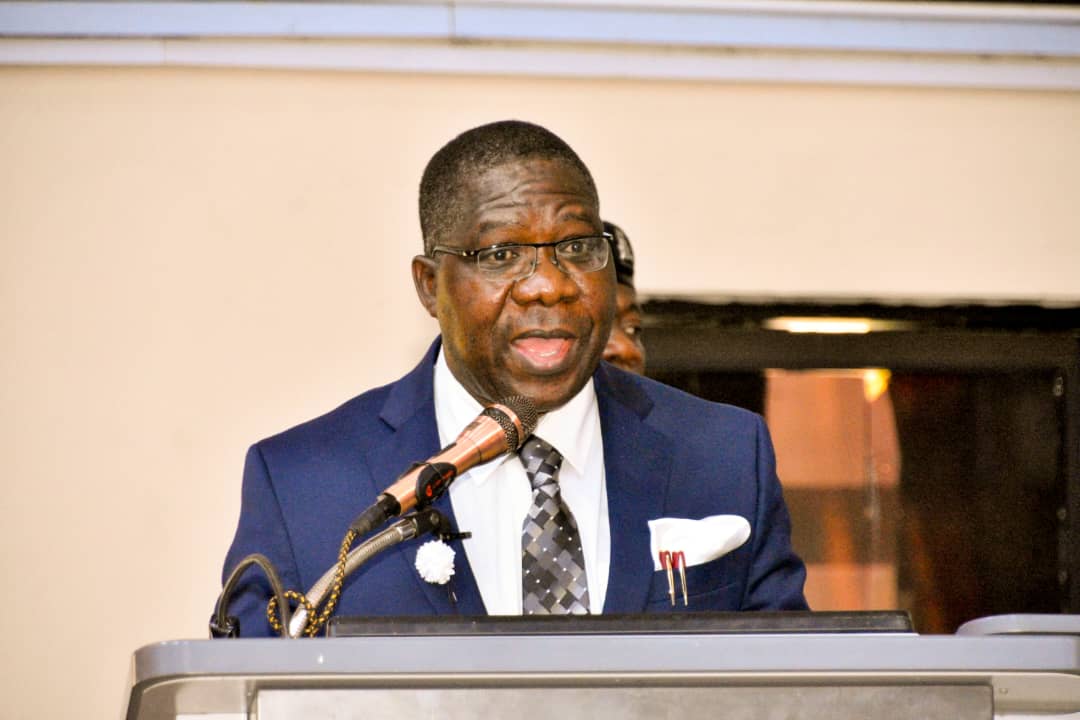
Senate Leader Opeyemi Bamidele has announced that the legal framework for the creation of state police will be ready by December, saying the National Assembly is fast-tracking constitutional amendments to address the nation’s worsening security challenges.
State police have moved from rhetoric to reality,” Bamidele said Thursday at the National Institute for Policy and Strategic Studies in Kuru, Plateau State, where he addressed participants in the institute’s Senior Executive Course 48.
Bamidele said the National Assembly aims to complete the remaining steps and send the bill to President Bola Tinubu for assent by December.
He said no fewer than 30 State Houses of Assembly had approved the State Police Constitution Alteration Bill, 2026, exceeding the two-thirds threshold of 24 states required under Section 9(2) of the 1999 Constitution.
The approval shifts the reform from a long-running policy debate into the final stages of constitutional amendment.
The National Assembly must now collate the state assemblies’ reports, pass a resolution by simple majority in both chambers and transmit the amendment to the president for assent.
Bamidele, vice chairman of the Senate Committee on the Review of the 1999 Constitution, said lawmakers intend to finish those steps on or before December 2026.
The proposed framework would allow states to establish police services operating alongside the federal force.
Under the draft structure, governors would appoint state police commissioners subject to confirmation by state assemblies and could direct the forces on insecurity matters, Bamidele stated.
Bamidele sought to preempt concerns that state police could become instruments of governors, saying the reform is designed to create “state-led, community-anchored policing” rather than state armies.
He said the framework would include constitutional safeguards, operational standards, oversight mechanisms and human-rights protections.
The amendment’s final effect will depend on the National Assembly’s resolution, presidential assent and subsequent implementing legislation.
