

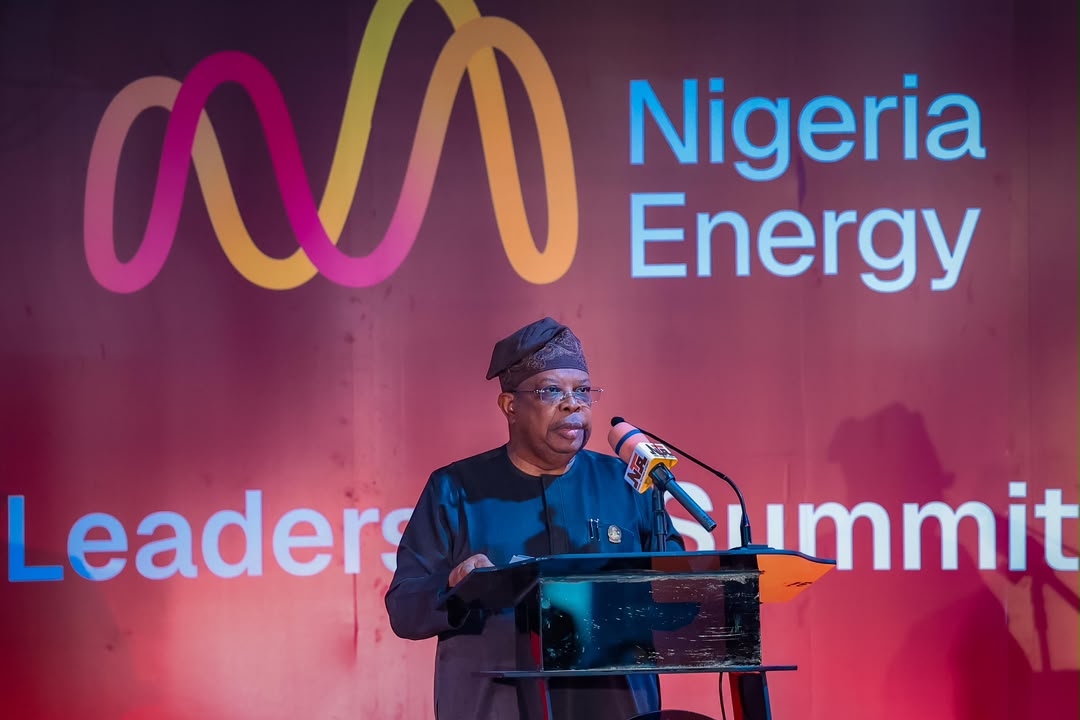
The Minister of Power, Joseph Tegbe, has outlined four cardinal priorities to stabilise the power sector, saying the focus must now shift from designing reforms to delivering measurable improvements in electricity supply.
Speaking at the opening of the Nigeria Energy Leadership Summit 2026 in Lagos, Tegbe listed the priorities as enhancing energy zones, strengthening sector liquidity and sustainability, optimising existing assets and expanding infrastructure to meet future demand.
The plan is intended to address bottlenecks across generation, transmission and distribution.
The minister identified three priority economic energy corridors: Lagos–Ogun, Benin–Enugu–Port Harcourt and Abuja–Kaduna–Kano.
The approach is designed to align generation, transmission capacity, distribution readiness and identifiable demand in areas where improved supply can support industrial output.
The Lagos–Ogun corridor alone accounts for roughly half of national electricity demand, according to Tegbe, making it a central test case for the broader programme.
Tegbe cited constrained gas supply, an overstretched transmission network, distribution losses and accumulated liabilities as the sector’s principal challenges.
He said the government is working to resolve legacy debts, having paid ₦1.23 trillion of an estimated ₦3.3 trillion, while seeking to block financial leakages that could create new liabilities.
The government is also continuing the Presidential Metering Initiative, the Distribution Sector Recovery Programme and the Meter Acquisition Fund to reduce technical and commercial losses and improve revenue collection.
Tegbe said reforms aligned with President Bola Tinubu’s Renewed Hope Agenda must deliver tangible benefits, including stronger industrial productivity, business growth, investment and job creation.
The Nigeria Energy Leadership Summit and Exhibition, running from October 27 to 29, brings together energy companies, technology providers and investors to showcase solutions and explore opportunities across the power and broader energy value chain.
