

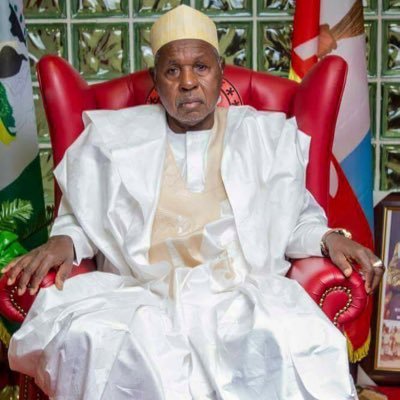
Former Governor of Katsina State Aminu Masari has declared that President Bola Tinubu’s plans for Nigeria surpass those of any leader he has encountered in nearly 40 years of political activity, urging citizens to look past mounting criticism of the administration.
Speaking at a public function in Kaduna addressed largely to women, Masari said his assessment drew on a political career spanning almost four decades, including service as Speaker of the House of Representatives from 2003 to 2007 under President Olusegun Obasanjo and two terms as governor of Katsina State from 2015 to 2023.
“Even if I were asked to swear, on my age and my political involvement for almost 40 years, I can confidently say I have never seen a president with better plans to make Nigeria great than Bola Tinubu,” Masari said in a video released by HM Arewa, a Hausa-language media platform.
In August, he Maisari was appointed Deputy Director-General, Parliamentary Mobilisation, of the All Progressives Congress (APC) presidential campaign council.
Mr. former Governor challenged assertions that the Tinubu administration has accomplished little, arguing that similar lines of attack recurred under previous governments.
“A short look at our history shows that in 1999, after Obasanjo finished his first four years, these same people came out with issues of sectionalism and tribalism,” he said.
He said, also, that the administration of former President Goodluck Jonathan faced comparable criticism.
“The people who claim that Bola Tinubu has done nothing are the kind of people who never appreciate when someone is doing well,” Masari said.
The former governor also criticised efforts to frame political disagreements in religious or ethnic terms, questioning the logic of tying particular faiths to specific groups.
“What surprises me about our people when they talk about religion is this, is religion exclusive to the Hausa, the Yoruba, or even the Igbo?” he asked.
With the 2027 elections approaching, Masari appealed to women preachers to use their influence within families and communities to discourage rhetoric that could deepen divisions.
“Each and every one of you knows how to talk to her husband or children better than anyone else can,” he said, describing divisive narratives as the work of actors pursuing personal interests.
He called on Nigerians to resist attempts to exploit religious and ethnic sentiments for political gain, framing such appeals as a recurring pattern rather than a unique feature of the current administration.
