

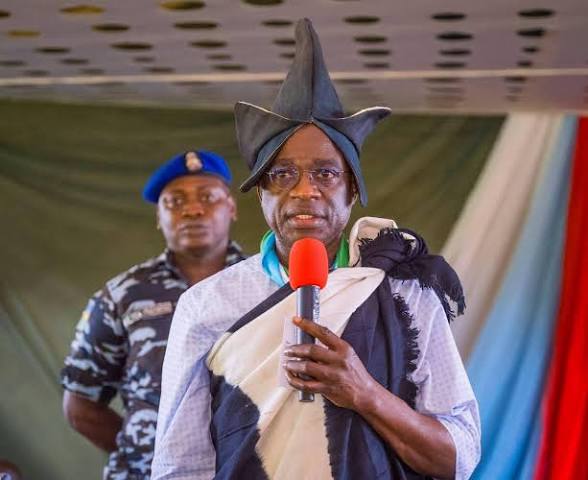
Benue State North West Senatorial District on Thursday joined the string of fervent endorsement and praises for Governor Hyacinth Alia’s leadership saying his work has tangibly changed daily life after years of neglect.
Commissioner for Information and Orientation Solomon Iorpev in a statement said at two town-hall events in the Gwer/Gwer West and Makurdi/Guma federal constituencies, elders, party officials, traditional rulers and the clergy lauded infrastructure projects, industrial investment and steady public-payments as evidence that the state government has shifted from rhetoric to delivery.
By the time the gatherings ended, one refrain had become dominant: “One good term deserves another.”
According to Iorpev, speakers pointed to the return of Internally Displaced Persons (IDPs) to their communities as a visible sign that security and restoration efforts are taking hold.
“People are coming home,” one local elder said, attributing the trend to improved protection and resettlement measures under Governor Alia’s administration.
The statement noted that residents in the communities highlighted uninterrupted salary and pension payments, a discipline they said had eroded under previous administrations.
Infrastructure was the centerpiece of praise. Major road projects running through the two constituencies, upgrades to Makurdi’s urban thoroughfares, and the city’s new underpass and road dualizations were cited as proof the government is investing beyond the state capital.
Makurdi’s nighttime skyline, punctuated by stretches of solar-powered street lighting, drew particular notice.
Commissioner Iorpev said various speakers during the tour described gains in social infrastructure as well: multi-storey buildings for government primary schools and strengthened primary health-care centers across the constituencies.
“These are things our children and mothers can use every day,” a school administrator said.
Industrial development emerged as a recurring theme as leaders hailed the siting of a brewery, fruit-juice and fruit-concentrate plants and the revival of Taraku Mills — an operation that, they said, prior governments had failed to get running despite heavy spending.
The revival of state-owned factories producing bread, nails, water and leather were also presented by a number of speakers as practical bulwarks against national economic pressures.
One account resonated politically: the construction of the Wurukum overhead bridge.
The bridge had not been included in the federal Makurdi/Ninth Mile road project until Governor Alia personally pressed for its inclusion, residents said — an example, they said, of a governor willing to press for local priorities even when they fell outside initial plans.
Compensation paid to landowners affected by the federal road project also won praise.
Community leaders said timely settlements had removed a long-standing bottleneck and paved the way for faster construction.
The gatherings had the air of a political endorsement including traditional rulers, church leaders and party elders delivered aligned, public expressions of support that local organizers and observers characterized as unusually spirited and unified.
