

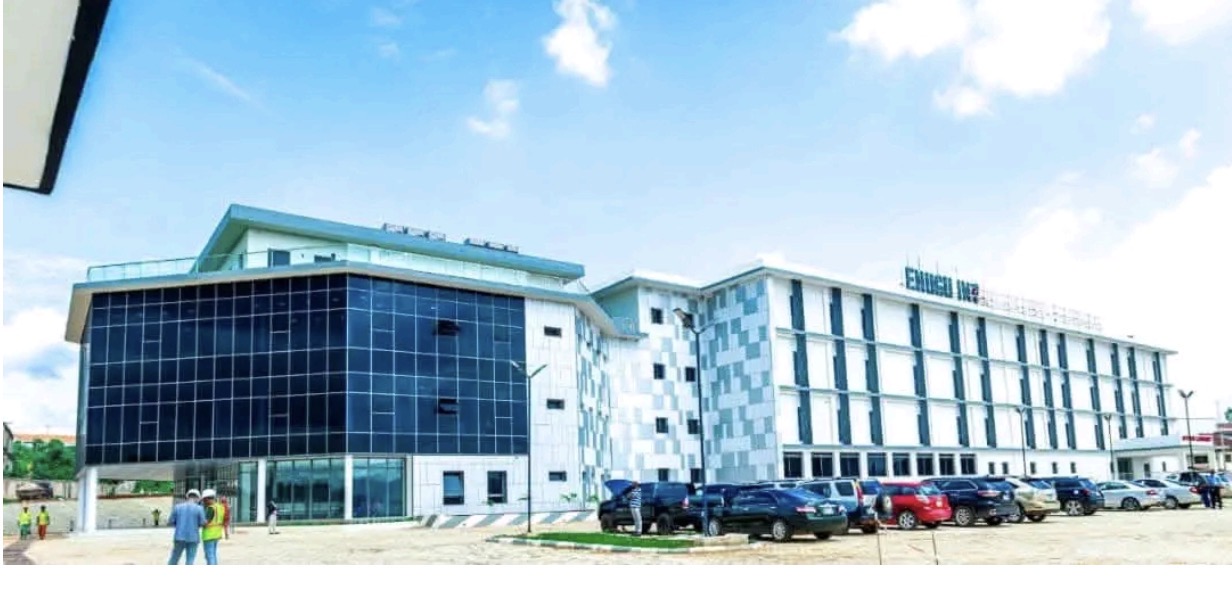
Enugu State Governor Peter Mbah has unveiled a 300‑bed, multi‑specialty facility pitching the new Enugu International Hospital as a strategic bid to capture a slice of the billions Nigerians spend on healthcare overseas.
Speaking to reporters after a pre‑launch tour, Governor Mbah described the hospital as the result of a deliberate, long‑planned economic and health policy, not a political impulse.
“This is not a facility that is knee‑jerk or that was accidentally put here,” he said, recalling that plans to develop Enugu into a medical‑tourism hub were part of his campaign platform.
“We knew the size of that market. We also knew that we wanted to have a good chunk of that market.”
NewsQuest reports that Central Bank of Nigeria (CBN) data show Nigerians spent $684.7 million on medical travel in 2025, up 6.5% from $643.1 million in 2024, at the official exchange rate roughly N934.6 billion.
Governor Mbah said retaining a portion of those outflows would help finance broader economic ambitions: the governor has set a target of growing Enugu’s economy from $4 billion to $30 billion within his eight‑year term.
The hospital will combine on‑site specialist centres with telemedicine and digital diagnostics to allow patients to access international medical opinions without leaving Nigeria, Mbah said.
“We can actually attract or even receive those opinions abroad, and yet the money and the manpower would still remain here,” he said, adding that treatment costs would be lower than in typical destinations for medical travel, such as India, Turkey, the United States and the U.K.
The facility is expected to spur jobs and reverse a small but consequential brain drain.
Governor Mbah said several Nigerian clinicians practising overseas had already expressed interest in returning.
“They are now happy to come back home and give back the gift that was nurtured here,” he said.
Hospital CEO Sam Agwu described the facility’s clinical ambitions.
A professor and physician, Mr. Agwu said six core specialty centres will operate on opening, including a Cancer Centre offering nuclear medicine and therapeutics, a Heart and Vascular Centre equipped for open‑heart surgery and catheter‑based procedures, a Neurosciences Centre for brain and spine care, and a Renal and Transplant Centre that will provide dialysis and organ‑transplant services.
The project signals a growing trend among Nigerian subnational governments to use health infrastructure as an economic development lever, betting that improved domestic capacity can curb foreign medical spending and attract both patients and practitioners back to the country.
