

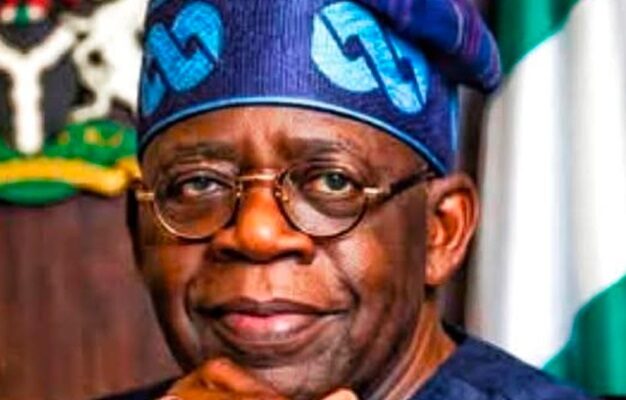
Several State Governors are publicly praising President Bola Tinubu’s economic reforms, declaring that the measures aimed at ending fiscal distortions have now unlocked resources that are financing roads, schools and other high‑profile projects at the subnational level.
The Governors from both ruling and opposition parties point to two signature moves by the President – removal of the long‑standing petrol subsidy and the unification of multiple exchange rates as the principal engines behind an uptick in Federal allocations and Internally Generated Revenues (IGR) that have reduced borrowing and accelerated project rollouts.
“The process of getting out of a very bad economy has to be everybody’s business,” Senate President Godswill Akpabio said when he marked President Tinubu’s 78th birthday in March, echoing messages from State capitals that fiscal gains are filtering down.
“States are getting more funds now for development, and many States are not borrowing,” he said.
From Abuja to Enugu, Governors point to larger Federation Account allocations as the clearest channel of impact. Federal sharing of savings freed up by subsidy removal, they say, has eased wage pressures and allowed capital spending to proceed without the heavy borrowing that marked prior years. In public remarks and State briefings, Governors continue to cite new federal approvals for inter‑state highway projects, road rehabilitations and other infrastructure as evidence.
“In a little over two months, we have saved over a trillion naira,” President Tinubu himself, said in a nationwide broadcast, adding that the subsidy had disproportionately benefited smugglers and fraudsters.
The decision to abandon multiple exchange‑rate windows, moving to a market‑driven naira, his administration insists, has also helped reduce arbitrage, improve transparency and encouraged foreign investors.
Observers agree that the nation’s fiscal and macroeconomic indicators have responded in ways that credit‑rating agencies and multilateral lenders note with deep interest. Fitch upgraded the sovereign rating in April 2025, pointing to “improved policy credibility.” Moody’s and S&P followed with upgrades in 2025 and 2026, citing exchange‑rate liberalisation, monetary tightening and steps to end deficit monetisation.
Those moves, analysts say, have helped to restore some investor confidence after years of policy drift.
Tax reform has also figured into the story with four tax bills signed into law in June 2025 helping to widen the country’s tax base and stepped up revenue mobilisation. Executive Chairman of the Nigeria Revenue Service (NRS) Dr. Zacch Adedeji told a large audience at the commissioning of the agency’s new corporate headquarters in Abuja that aggregate revenue collections had risen substantially, from about N6.8 trillion five years earlier to N28.7 trillion in 2025, and that a 2024 package delivered a year‑on‑year jump of roughly 76 percent.
Taken together, those figures have become talking points for Governors who want to show constituents tangible returns. Enugu State Governor Peter Mbah is among the leaders of the subnationals that have credited President Tinubu administration’s interventions for enabling “remarkable infrastructure development.”
Ekiti Governor Biodun Oyebanji said his State had received “more than what the President promised,” citing federal approvals for major concrete road projects. Niger State’s Umar Bago also confirms that his State’s Federation Account receipts had tripled and internally generated revenue had quadrupled to about N10 billion per month, allowing a flurry of highway and agricultural projects.
On his part, Lagos State Governor Babajide Sanwo‑Olu consistently describes President Tinubu’s reforms as complementary to the commercial city’s own development blueprint, arguing that federal projects—ranging from coastal highways to rail expansion—are visible evidence that the national agenda of the present administration is producing real time local benefits.
The applause from the subnationals contrasts with the initial pains expressed by citizens following early days of the reforms. The fuel‑subsidy removal in May 2023 triggered a sharp spike in pump prices and widespread public alarm, igniting warnings from rights groups and opposition figures that the decision would deepen hardship unless paired with targeted social cushions.
Amnesty International’s Nigeria office, for example, urged that subsidy removal be accompanied by protection measures for vulnerable populations.
Economists and investors took a more cautious but generally supportive view. Some described the policy line—“short‑term pain for long‑term stability”—as a necessary correction to chronic fiscal drains.
But President Tinubu and his handlers point to direct savings and improved macro indicators as vindication, while acknowledging higher inflation and the immediate cost of adjustment.
The extent to which the States can sustain the development gains depends on several variables. Increased Federal allocations in terms of fund transfers and higher IGRs provide fiscal space, but long‑term improvement will hinge on durable growth, continued policy predictability, and the administration’s ability to protect vulnerable households during the transition period in the reforms.
It is also important to note that pouring out praises for the President alone is not enough, as project execution will also depend on States’ capacity, procurement standards, and accountability on their part.
For now, the political payoff is clear: the Governors are eager to show voters visible infrastructure achievements, a deliberate and strategic action to align with a government at the national level whose reform agenda has won plaudits from rating agencies and international creditors, also bolsters their appeal moving into a general election.
What is indisputable is that these Governors’ laud praises give President Tinubu a political advantage heading into 2027, signaling strong elite support and reinforcing a narrative of competence that contrasts with opposition claims of his government’s poor performance.
