

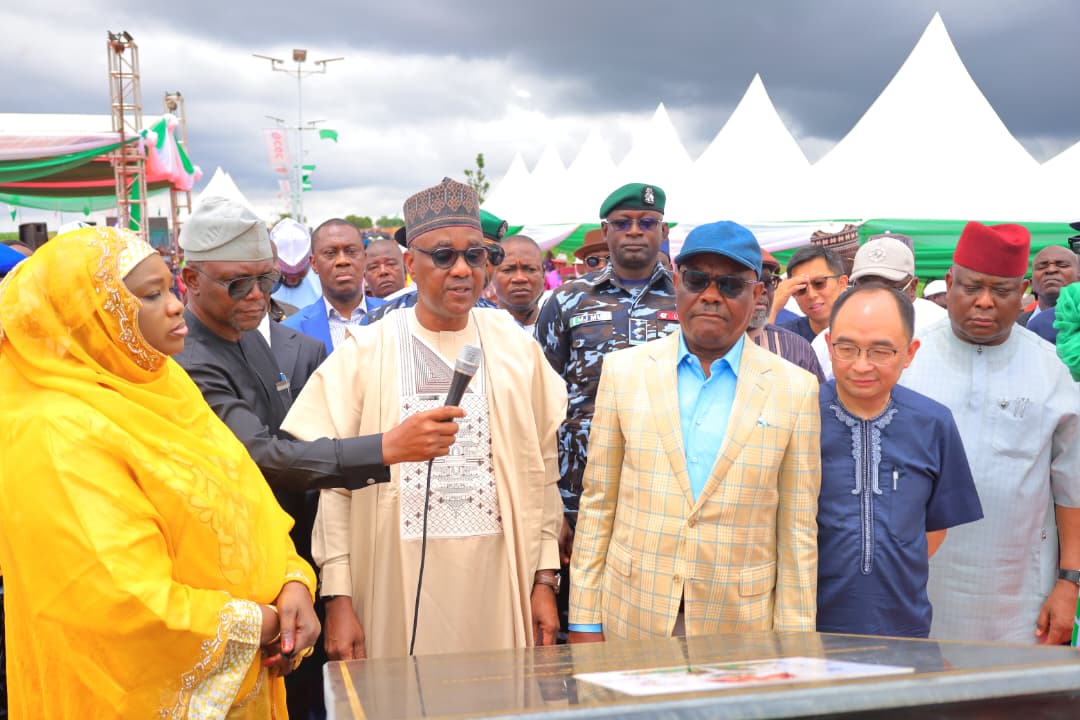
President Bola Tinubu has said that new infrastructure serving the Wasa District informal sector will help transform the area into a commercial hub, raise Abuja’s internally generated revenue and reduce the cost of doing business for thousands of artisans and mechanics.
Speaking at the commissioning of access roads to the Wasa Informal Sector Layout, President Tinubu, represented by the Speaker of the House of Representatives, Tajudeen Abbas, described the project as the fulfillment of a long-standing promise to relocate traders from the congested Apo Mechanic Village.
“This is an investment in human dignity and economic freedom,” he said, adding that the development was intended to deliver modern, permanent space for workers who had operated informally on the city’s fringes.
The President credited the Federal Capital Territory (FCT) administration for pushing the project and singled out FCT Minister Nyesom Wike and Minister of State Dr. Mariya Mahmoud for their leadership.
He said their efforts signaled an end to the era of abandoned public projects in the capital.
President Tinubu described the investment as part of a broader agenda to cushion Nigerians from the short-term pains of economic reforms while building “a sustainable, resilient future” through social interventions, food‑security measures and structural projects.
Minister Wike, who also spoke at the event, noted the relocation had been completed in under a year after the contract was awarded last November to CGC Nigeria Ltd.
He urged traders to cooperate with the move and praised the contractor and local area council chairmen for timely delivery.
Dr. Mahmoud described the road openings as tangible evidence of the administration’s “Renewed Hope” agenda extending beyond the city center.
She said the new infrastructure would unlock investment and prosperity for Wasa residents and called on the community to protect and maintain the assets.
Acting Executive Secretary of the Federal Capital Development Authority, Engineer Richard Yunana, said the contract covered access roads plus power and water supply.
He characterized the scheme as a purposeful relocation to city fringes, where informal activities—motor mechanics, parts dealers, car marts and other artisans—can operate without exacerbating congestion in central commercial districts.
Engineer Dauda, speaking separately about site selection, said the layout provides a more organized alternative to the chaotic stretch along the Outer Southern Expressway where many traders now work.
The Wasa project reflects a broader set of government efforts to formalize informal economic activity, a strategy officials say will broaden the tax base and lower business transaction costs—key objectives as the administration seeks to stabilize public finances while promoting economic growth.
