

By Anule Emmanuel
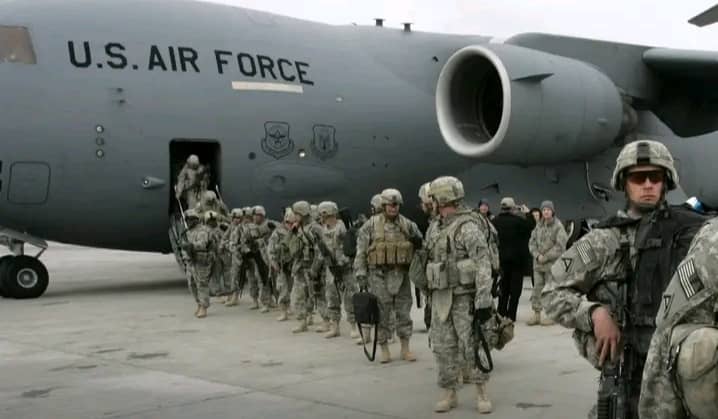
The arrival of roughly 100 US troops at a military airfield in Bauchi State early this year, with a later expansion to about 200 personnel, and a subsequent joint strike that killed a senior Islamic State West Africa Province commander, mark a pivotal moment in Nigeria’s long-running security crisis—and a significant deepening of America’s military engagement in Africa.
The US deployment, officially described by the Federal Government as a training and intelligence‑sharing mission against Boko Haram and ISWAP, comes amid high‑level security diplomacy between the two countries.
Nigerian officials point to meetings last year involving the US Congress, the State Department, the National Security Council, and Pentagon representatives as the backdrop for new commitments on equipment, intelligence, and expedited arms transfers.
The US, for its part, has described its presence in Nigeria as limited and technical rather than the return of a large combat force, a characterization that Nigerian officials have also welcomed.
Not long ago, the Defence Headquarters spokesman, Major General Samaila Uba, called the arrival of the US personnel a boost to “specialised technical capabilities” that will strengthen Nigeria’s ability to deter terrorist threats and protect vulnerable communities.
The presidency—portraying the partnership as “strategic diplomacy for survival”—has stressed that the collaboration respects sovereignty while promising to equip the Nigerian military to take the lead.
The operational case for US involvement was boosted on Saturday night when Nigerian and American forces struck a compound in the Lake Chad Basin, killing a senior ISWAP leader identified by President Bola Tinubu as Abu‑Bilal Al‑Manuki.
President Tinubu, in a statement, described the raid as a milestone in bilateral counterterrorism cooperation—an example of how intelligence sharing and limited US strike support can produce concrete results against transnational extremist networks.
American President Donald Trump has described the elimination of Abu-Bilal al-Minuki as a major blow to ISIS’ African and global networks. Trump reportedly added his death meant disrupting funding channels and command structures of ISIS.
“Abu Bakr al-Mainuki was second in command of the Islamic State group globally and “thought he could hide in Africa, but little did he know we had sources who kept us informed on what he was doing,” the US President posted on his official Truth Social handle.
The Defence Headquarters has called the Saturday’s air-land operations in the Lake Chad a landmark joint counter terrorism operation of ‘historic significance’.
But the February US troop arrival move, has since stirred a vociferous political debate with critics—from human‑rights lawyers to academics and former lawmakers—contending that sending foreign troops onto Nigerian soil without explicit parliamentary approval risks eroding constitutional norms and resurrecting neo‑colonial anxieties.
Rights lawyer Femi Falana and others say the deployment sets a dangerous precedent that should be subject to public scrutiny and legislative oversight.
The politics was complicated further by America’s earlier rhetoric. The Donald Trump administration’s designation of Nigeria as a “Country of Particular Concern” over religious‑freedom issues and allegations—rejected by the Federal Government, President Tinubu, and his aides—about targeted attacks against Christians injected a diplomatic strain beneath the cooperation.
President Tinubu and his officials insist that the violence affects Christians and Muslims alike, with some observers wondering whether pressure from the US government helped nudge Nigeria toward deeper security ties. Historical ties between the two countries complicate the criticism.
US–Nigeria security cooperation stretches back decades; State Department records show substantial investment in military education and training. Between 2019 and 2023, Nigeria was among the top recipients of International Military Education and Training funding in sub‑Saharan Africa. For proponents in President Tinubu’s government, the current deployment is an extension of longstanding security collaboration rather than a rupture.
Strategically, the stakes are high. Nigeria—Africa’s most populous country and largest economy—faces an array of security challenges: insurgency in the northeast, banditry and kidnapping in the northwest and north‑central region, and cross‑border criminal networks in the Sahel and Lake Chad Basin.
The Tinubu administration presents the US military presence as tactical leverage to dismantle terror sanctuaries and accelerate the Nigerian military’s capacity to restore order.
The intervention, however, also risks political fallout. Sceptics have expressed worry about sovereignty and accountability. Regional observers also note public sensitivity to foreign boots on African soil; this is a reason why the US government must weigh how a deeper footprint could affect American credibility if civilian harm—or mission creep—emerges.
For President Tinubu and his government, the challenge is twofold: to turn short‑term tactical gains into sustainable security improvements while managing a fractious domestic debate about the price of foreign assistance.
Political and security commentators have noted that President Tinubu’s diplomacy turned what一 appeared as potential US military confrontation—triggered by Trump’s “Christian genocide” allegations and threats into a structured military alliance.
“I think I will give kudos to the Nigerian government for turning an aggressive confrontation from the US into a collaborative effort where the Nigerian government is now benefiting from the US military hegemony,”Omotayo Yusuf, a political commentator, said.
On his part, the Deputy spokesman for the House of Representatives, Philip Agbese described the arrival of the American troops as a sign of deepening security cooperation between Nigeria and the United States, calling it a “turning point” in the country’s fight against terrorism, banditry, and violent crimes.
“This development underscores the confidence the administration of President Bola Tinubu has earned on the global stage. For the first time in a long while, Nigeria is engaging a major global power like the United States from a position of strategic clarity and mutual respect,” Agbese said.
If recent operations – both the December Christmas Day bombing and the Saturday military offensive are any guide, US support can yield measurable tactical outcomes. Whether it will translate into a lasting reduction in violence depends on several variables: the quality and timeliness of intelligence sharing, Nigeria’s ability to exploit tactical wins across governance and development gaps, and careful political management at home to ensure the partnership remains accountable and aligned with national priorities.
For now, the Tinubu government is betting that external technical support—and the symbolic reassurance that comes with it—will buy the breathing room required to rebuild security capacity.
No doubt, the outcome seen in last December Christmas Day bombing in the northwest of the terrorists’ enclave and Saturday’s killing of the ISIS leader will help define not only the future of US‑Nigeria security ties but also a broader question for African states: how to reconcile urgent security needs with the politics of sovereignty in a region already wary of outside military footprints.
