

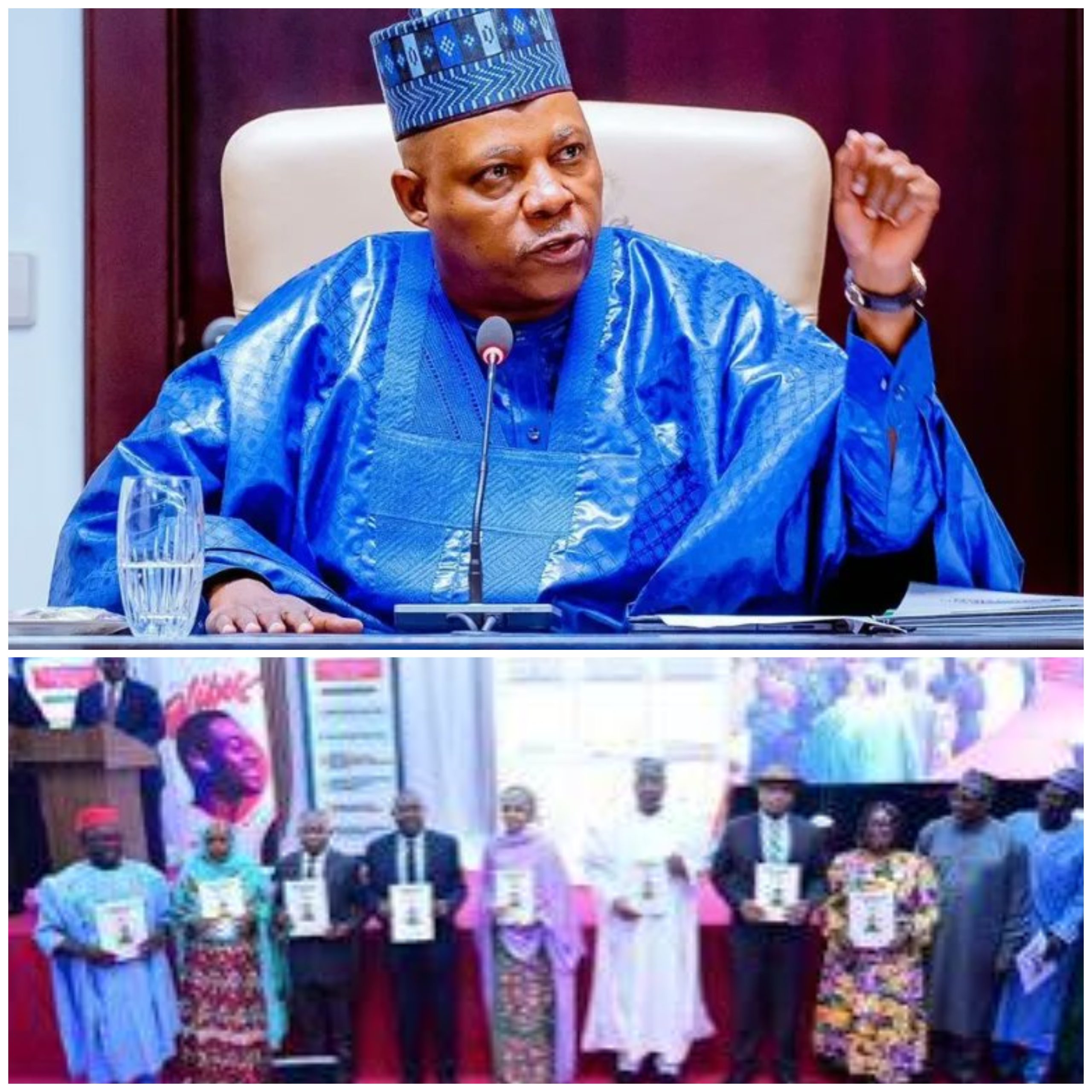
The Federal Government has launched a 2026–2030 National Drug Control Master Plan (NDCMP) on Monday, with Vice President Kashim Shettima urging federal and state authorities, lawmakers, businesses and civil-society groups to turn the strategy into sustained action.
Shettima said the plan’s success would depend on political will, adequate financing, coordination and accountability among the institutions responsible for countering drug trafficking and substance abuse.
He described drug control as a public-health, security, development and economic priority.
“A nation cannot secure its future if it fails to protect the people who must build that future,” Shettima said.
The Vice President, who was represented by the Special Adviser to the President on Special Duties, Modibbo Umar said enforcement alone would not resolve Nigeria’s drug problem.
The strategy, he said, must combine prevention, treatment, rehabilitation and action against illicit financial flows that sustain drug markets.
The plan is organized around six pillars: reducing drug supply and demand; expanding access to controlled medicines for medical and scientific use; promoting alternative livelihoods; disrupting the illicit drug economy; and improving governance, financing and coordination.
Shettima praised the National Drug Law Enforcement Agency (NDLEA), for launching an alternative-development program that encourages communities to replace illicit drug cultivation with legal agriculture.
He said the pilot program was operating in three communities in Ondo State and urged other governments to adopt it.
He warned that a national policy without a credible financing structure risked becoming “a mere declaration of good intentions.”
Government agencies, he said, should incorporate the plan’s priorities into budgets, work plans and implementation schedules.
“Five years from now, the significance of today’s launch will not be judged by the ceremony,” he said.
“Let this be the moment Nigeria moves from policy to action.”
NDLEA Chairman Mohamed Marwa said the new plan would build on the previous 2021–2025 strategy while addressing gaps in coordination, funding, service delivery, data management and oversight, particularly at state and local-government levels.
He said the earlier plan produced 77,736 arrests, seizures of more than 14.8 million kilograms of illicit drugs and more than 14,200 convictions.
More than 32,400 people received treatment, counseling or rehabilitation services during the period, he said.
The new strategy also targets emerging threats, including synthetic drugs, new psychoactive substances, encrypted communications and cryptocurrency-enabled trafficking.
Marwa cited an April 2026 operation involving the NDLEA, the U.S. Drug Enforcement Administration and authorities in Switzerland, France and Greece.
The operation, he said, dismantled a transnational criminal organization and led to the arrest of alleged drug trafficker Amadi Simon in Switzerland, along with two suspected female kingpins in Nigeria.
He also said several bank accounts and cryptocurrency wallets had been blocked, while courts issued interim forfeiture orders over properties allegedly linked to the suspects, including two hotels in Delta State and an apartment building in Abuja.
Marwa also pointed to the dismantling of a Nigerian-Mexican methamphetamine-trafficking network and a clandestine laboratory in Ogun State, involving drugs and chemicals valued at about $362.9 million.
Follow-up operations in Oyo, Ebonyi and Enugu states uncovered four additional laboratories and led to the arrest of 10 Mexican nationals and 14 alleged Nigerian collaborators, he said.
Marwa urged federal budget authorities to include the plan’s priorities in annual budgets and the Medium-Term Expenditure plan.
He also called on state and local governments to allocate dedicated funding for drug-control committees.
He appealed to banks, telecommunications and technology companies, agribusinesses and philanthropists to support prevention, treatment and alternative-livelihood programs.
In his remarks, the Attorney-General of the Federation, Lateef Fagbemi described the NDLEA as the foundation of Nigeria’s drug-control system and said the new plan would align law enforcement, public health, education, financial investigation and community participation under one.
He pledged cooperation with the judiciary to speed up drug-related prosecutions and support asset recovery, extradition, mutual legal assistance and cross-border investigations.
Fagbemi also emphasized the need to distinguish traffickers, who should face prosecution, from people with drug dependence, who require treatment and rehabilitation.
The Economic Community of West African States (ECOWAS) welcomed the plan, saying it aligned with regional efforts to build a safer and more resilient West Africa.
The bloc pledged support through experience-sharing, resource mobilization and cooperation among member states.
The launch, themed “Strategic Action for a Drug-Free Nation,” was attended by government officials, lawmakers, diplomats, representatives of the European Union and the United Nations Office on Drugs and Crime, traditional and religious leaders, civil-society groups and private-sector representatives.
