

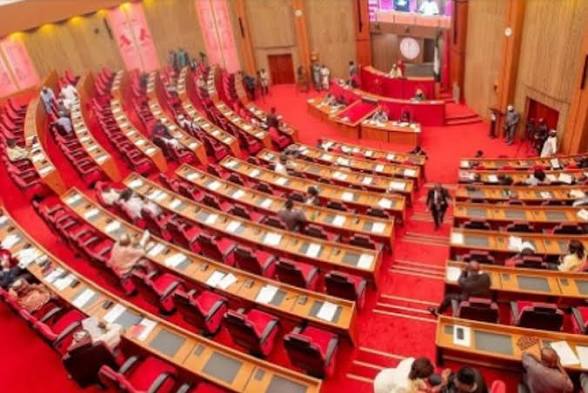
The Senate on Wednesday passed a bill to strengthen the administration of senior secondary education across the country.
The bill supports President Bola Tinubu’s plan to fix a sector struggling with poor management, high dropout rates and weak coordination between the federal and state governments.
The National Senior Secondary Education Commission (Amendment) Bill, 2026, seeks to bolster the powers and operations of the commission established under the 2023 act regulating senior secondary education.
It now moves to the House of Representatives, which has referred its version to its Committee on Basic Education and Services.
The bill, designated SB 1075, was transmitted to the Senate by Tinubu in July after the Federal Executive Council approved it in April.
The legislation follows a review of the commission’s implementation, which identified gaps in governance, accountability and coordination between federal and state authorities.
The proposed amendments are intended to improve the commission’s ability to regulate and promote senior secondary education, align federal and state policy implementation and support national education objectives.
Lawmakers approved the measure after a clause-by-clause review of a report from the Senate Committee on Education (Basic and Secondary).
Sen. Orji Uzor Kalu, an All Progressives Congress (APC) lawmaker representing Abia North, presented the committee’s report on behalf of Chairman Sen. Lawal Adamu Usman of Kaduna Central.
The Senate then read the bill for the third time and passed it.
The legislation is part of a broader effort by the Tinubu administration to restructure Nigeria’s education system.
Minister of Education, Dr Tunji Alausa has proposed reducing dropout rates and ensuring that children receive 12 years of uninterrupted schooling before entering higher education or vocational training.
The country operates a 6-3-3-4 structure: six years of primary school, three years each of junior and senior secondary school, and four years of tertiary education.
However, stakeholders say pupils often face barriers at each transition, including inadequate infrastructure, poverty, insecurity and financial constraints.
Those pressures contribute to dropout rates and complicate efforts to prepare students for higher education or the labor market.
The bill’s passage signals legislative support for a more centralized framework for senior secondary education, though its ultimate impact will depend on implementation, funding and cooperation from state governments.
The measure now heads to the House of Representatives, where lawmakers will consider whether to adopt the Senate’s version or reconcile differences before it is sent to Tinubu for assent.
