





When politics gives way to family, the trappings of power shrink to the quiet pride of a parent. True parental pride in a child’s success brings deep joy and is best captured in words about hard work, character and watching a child shine.

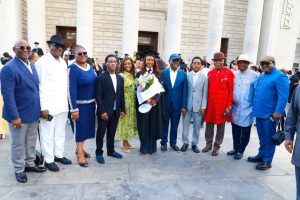
On a warm Thursday evening in Abuja, Nyesom Wike, Minister of the Federal Capital Territory and former governor of Rivers State, traded the scripted rhetoric of public life for something more intimate.
For Minister Wike, watching his daughter work hard and reach a goal brought quiet but powerful satisfaction.
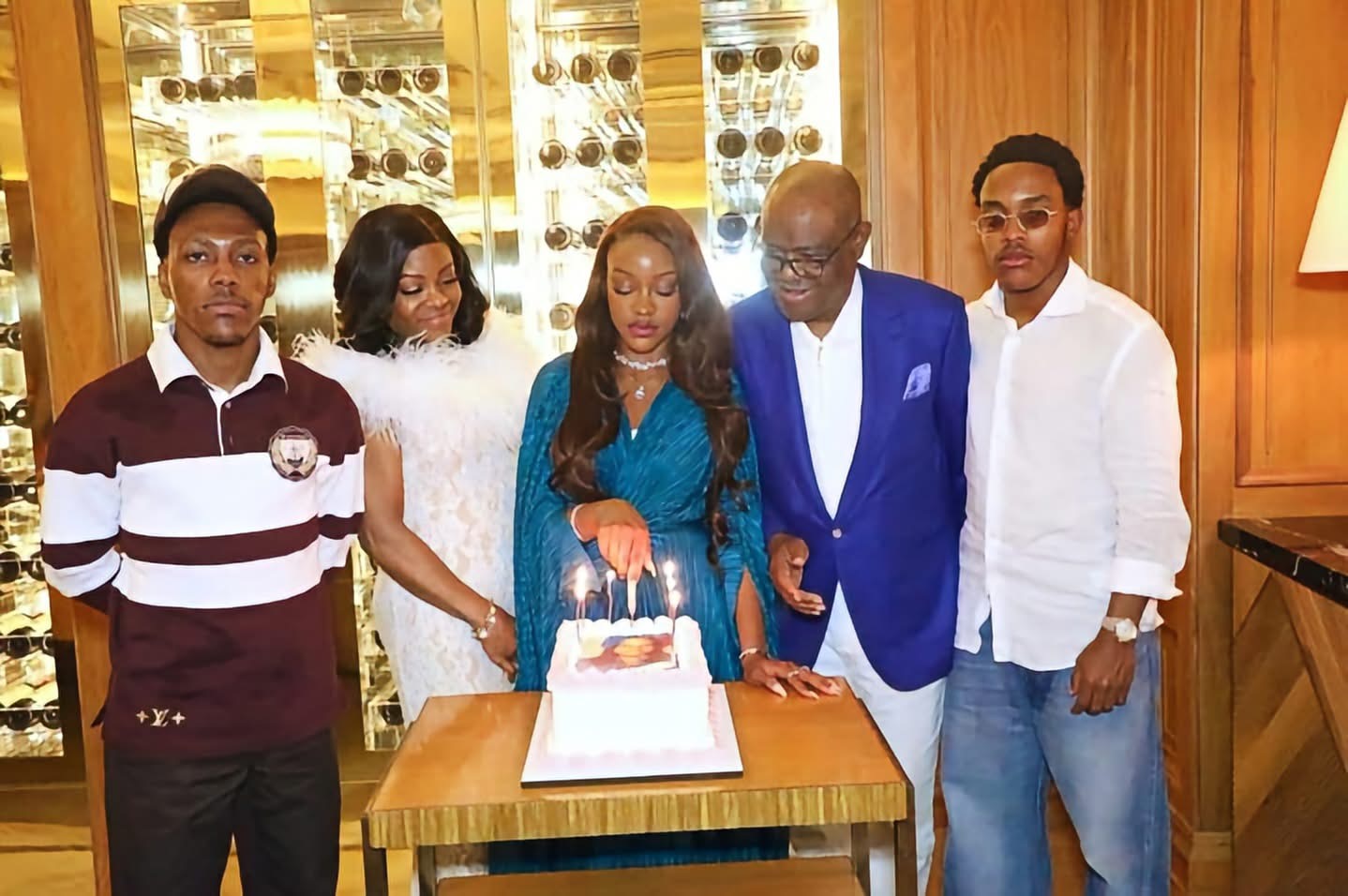
It was a private celebration for his daughter Jazmyne, who has just earned a law degree from the University of Southampton.
The gathering invited family, close friends and a handful of political associates—was modest by the standards of a high-profile Nigerian politician. It came without podiums or cameras but featured words of congratulations, the quiet circulation of well-wishers, and the steady, palpable attention paid to one young woman whose achievement had become, for a night, the household’s central fact.
The timing captured the dual identity many public figures juggle. The dinner came a night after Jazmyne was awarded a Bachelor of Laws with Upper Second-Class Honours by the British university—a feat to make any parent joyous.
Minister Wike, who has spent years operating in the nation’s often bruising political arena, spoke with the tone of a man grateful more than triumphant.
He called the graduation “a joyous moment for the family,” thanked God for “making the feat possible,” and singled out the virtues he said underpinned the success: hard work, discipline and commitment to excellence.
The minister’s language is familiar in public statements by politicians celebrating family milestones. What made the evening notable, however, was its domestic intimacy.
READ ALSO: ‘Tinubu’s support helping us to deliver in Benue’
Present were Wike’s wife, Justice Suzette, their two sons, and a close circle of friends; absent were the larger crowds and the grandstanding that often accompany political social functions. The dinner suggested a conscious narrowing of spectacle an effort to frame the narrative not as a political display but as a father’s quiet pride.
For Minister Wike, whose career has traversed the rough-and-tumble of state politics to the corridors of federal influence, the scene offered a different kind of capital: social proof of a personal legacy. His congratulatory message after the graduation ceremony was as much about a daughter’s achievement as it was about family continuity—an implicit statement that public life, for all its demands, can still yield private satisfactions.
Guests used the occasion to offer tributes and goodwill, a reminder that the accomplishments of the next generation circulate back to political networks as symbols of stability and aspiration.
For a young graduate stepping from an elite British university into a career field where legal training remains a prized credential, the dinner doubled as both celebration and signal. Jazmyne’s success reflects a household that prizes education and projects the refinement and accomplishment that bolster a political family’s public image.
Behind the pleasantries, the event also mapped the routines of power in contemporary Nigeria. Political affiliates attended, not to claim credit but to witness—and to be seen bearing witness—social currency in a system where associations matter. For Wike, the evening allowed him to occupy a role many voters and peers recognize: not merely a politician but a father marking a milestone with palpable, public affection.
The event was not without ceremonial gestures that did more than honour one degree. It transmitted values, reinforced networks, and humanised figures often viewed only through the prism of policy battles. For Jazmyne, newly returned from Southampton, the dinner was an initiation into a different kind of publicness—one where personal success becomes a shared story.
If the Minister’s statements thankful, proud, and admonitory toward continued excellence—read like a familiar parental script, that is because they are. Yet in the context of Minister Wike’s public life, they also serve as a reminder: political stature may open doors, but the quiet rewards of parenthood—witnessing a child’s deliberate achievements provide a rare, unvarnished satisfaction that no office, however powerful, can replicate.
No one should be surprised at the Minister celebrating a child’s success. He is, by many accounts, a committed family man who, like every parent, wishes beyond the turbulent moments in politics to see a successful family.
The Minister, himself a lawyer, who studied Law at the Rivers State University of Science and Technology (now Rivers State University), Port Harcourt, is married to Justice (Mrs.) Suzette/Eberechi Wike, a jurist and Justice of the Court of Appeal. They have three children: Jordan, Joaquin and Jazmyne.
Jordan, Wike’s eldest son, earlier in 2022 graduated with a Bachelor of Laws (LLB), Second Class Upper Division, from the University of Exeter, UK, before later earning a master’s in law from Queen Mary University of London.
Call it a family of lawyers, and you would be right: like father and mother, like children.