






By Anule Emmanuel
In the nation’s capital Abuja, a flurry of newly constructed and resurfaced roads, bridges and brightened public spaces has become both a tangible improvement to daily life and a carefully staged argument for President Bola Tinubu’s re‑election prospects in 2027.


At the centre of that effort stands the Minister of the Federal Capital Territory (FCT), Nyesom Wike — a former governor of oil‑rich Rivers State who has combined engineering projects with political messaging to reshape both the city’s landscape and its narrative.
For many residents of Abuja and commuters, the accelerated changes in the city are massive and phenomenal over a short period of three years, especially when compared with previous governments.
“Routes that used to take an hour now take half,” said Kaleb Asotar, a senior bank official in Wuse, echoing a sentiment common in social‑media posts and morning conversations across the city.
This public approval has become part of the political calculus supporting the deliberate interventions. At the top of government, the makeover is described as evidence of success.
President Tinubu has publicly expressed confidence that Minister Wike “has not disappointed” him, praising the speed and scale of the interventions and describing Wike as an audacious, results‑driven Minister who “does not disappoint.”
The President has also publicly commended the Minister’s resilience and commitment to transforming the Federal Capital Territory, saying the former Rivers Governor’s performance “exceeds expectations.”
“Nyesom Wike has been one of the shining stars in the cabinet, an exceptional performer, developing infrastructure in the federal capital as never seen before and proving that his moniker as ‘Mr Project’ is not limited to his home state of Rivers.
“I commend him for being one of the champions of our Renewed Hope Agenda, even though he belongs to another party, and wish him well as he marks another year in his life journey,” Tinubu said in a birthday message to the FCT Minister.
Those endorsements do more than reward administrative competence; they underscore a strategic objective that has quietly driven efforts to present a visible, functioning capital under Tinubu’s stewardship ahead of the 2027 campaign.
“I gave you a simple charge: ‘Make Abuja work for all.’ You took it and ran with it. From satellite towns to the city centre, you are turning blueprints into roads people can drive on today.
“Your energy, your insistence on delivery and your refusal to accept excuses are why the FCT is transforming under this administration. Nigerians see it. I see it. Well done, Minister Wike,” the President said last month during the commissioning of some new projects in the city.
In the first three years of President Tinubu’s administration, Abuja has witnessed a visible interventionist drive on roads, water and urban infrastructure, with repeated official commissionings and flag‑offs of projects across the city and its satellite towns.
Completed works include the Airport–Kuje Highway, Abuja arterial Road N5, the N16/Ring Road II interchange, Akinwumi Ajibola Street in Gaduwa, and water projects in Karu and Bwari.
Only recently, Minister Wike unveiled 31 landmark projects for commissioning, with flag‑off ceremonies ongoing across Abuja — a development many observers describe as unprecedented.
The Minister declared 31 days devoted to inaugurating the projects to mark President Tinubu’s third year in office. The slate of infrastructure projects aims to ease chronic congestion and spur development across the capital territory.
Key completions and works under way include the Outer Southern Expressway, the Airport–Kuje Highway, Arterial Road N5 (Obafemi Awolowo Way), a newly built Court of Appeal complex in Dakibiyu, multiple judges’ residences, water‑supply lines to Karu and Bwari, the Kuje–Gwagwalada dual carriageway, Transit Way N2 linking the Central Area to Wuse, and a redesigned Abuja City Gate.
In residential and commercial districts — Katampe, Mabushi, Wuye, Guzape, Jahi, Gaduwa, Karsana, Dakibiyu and Wasa — a wave of new roads, bridges and interchanges is reshaping mobility patterns and opening fresh corridors for housing and business investment.
Close observers acknowledge that for the first time in years, the city’s peripheral area councils are seeing a strong government footprint. Roadworks in Kwali, Gwagwalada, Kuje, Bwari, Abaji and the municipal AMAC are either complete or underway, bringing infrastructure to communities long left on the margins.
These projects reflect a strong focus on easing traffic congestion, improving district connectivity and expanding basic services in the FCT.
Minister Wike’s interventionist drive goes beyond concrete and asphalt. Other governance changes implemented under his watch include, most notably, exempting the FCT from the Treasury Single Account.
The Minister said this bold step has increased fiscal agility and sped project delivery, a shift central to turning plans into visible results.
Besides his usual capacity to boldly deliver as witnessed in his eight years of governing Rivers State, the calculus of Minister Wike’s exceptional performance in the FCT is that, by concentrating resources on projects with highly visible returns — repaired roads, flood‑control measures that stanch seasonal chaos, and public lighting that reduces nighttime insecurity — the administration is shaping a narrative of effective governance.
The message is also straightforward: a stable, well‑managed capital is a proof point for national leadership.
Residents’ reactions have largely been enthusiastic. At different times, jubilant residents trooped into the streets of Abuja, chanting songs of praise and affirming that the Renewed Hope Agenda was delivering tangible results in the nation’s capital.
“We are pleased with the ongoing transformation in Abuja. President Tinubu made the right choice in appointing Wike as FCT minister. We will continue to support this administration to ensure more development,” said Salisu Illiasu, a resident of Kwali.
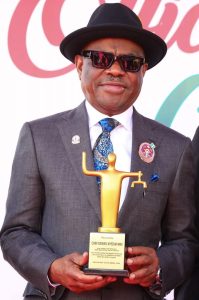
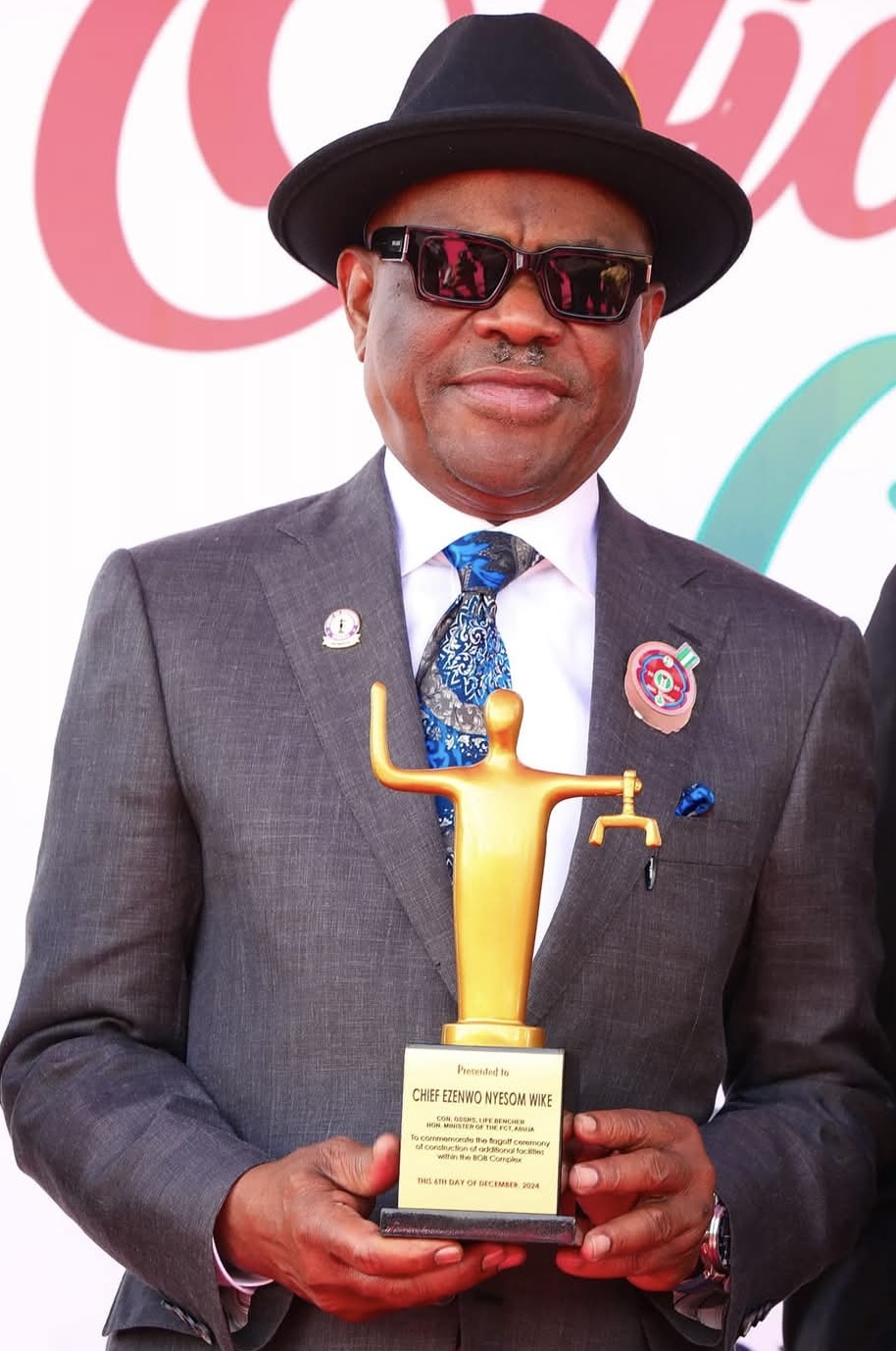
Minister Wike has received numerous awards for his large and innovative project deliveries in the city. Original Inhabitants of the Federal Capital Territory in December 2025 honoured him with the “Nigeria Infrastructure Minister of the Year Award” for his contributions to the development of outer city districts and satellite towns.
The management of Leadership Newspapers in 2025 also presented Wike with a “Quinquennial Award for Outstanding Person in Governance and Infrastructure.”
Only last Thursday, the State House Press Corps (SHPC), at its Presidential Press Corps inaugural annual dinner attended by President Tinubu and his wife, Oluremi, crowned Wike with an award for his bold policy initiatives and speedy delivery of quality, enduring infrastructure that is transforming Nigeria’s capital city.
Minister Wike’s awards in just three years are numerous. His performance as FCT Minister could materially and positively impact President Tinubu’s 2027 re‑election prospects in Abuja.
The Minister’s visible infrastructure and service delivery strengthen local goodwill that can translate into votes.
As the 2027 election horizon approaches therefore, the Abuja development programme will be watched closely — both as a test of the Tinubu administration’s ability to convert urban fixes into enduring reforms and as a political instrument intended to bolster the President’s re‑election case.
President Tinubu himself is hopeful and believes that Wike’s sterling performance will translate to a victory for the All Progressives Congress (APC) in Abuja, and, by extension, his own victory in next year’s presidential election.


