







President Bola Tinubu on Thursday said that his administration refused to pay ransom to the armed militants who abducted pupils and teachers in Oyo State, describing the hard line as central to the operatives’ safe recovery and to broader shifts in the nation’s security posture.
Speaking at a the Presidential Villa, Abuja in a meeting with traditional rulers from Oyo, led by the Olubadan, Oba Rashidi Ladoja, President Tinubu outlined the government’s response to the mass abduction in Oriire Local Government Area in mid‑May and the subsequent rescue on July 10.


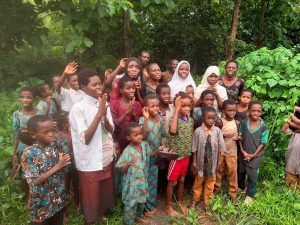
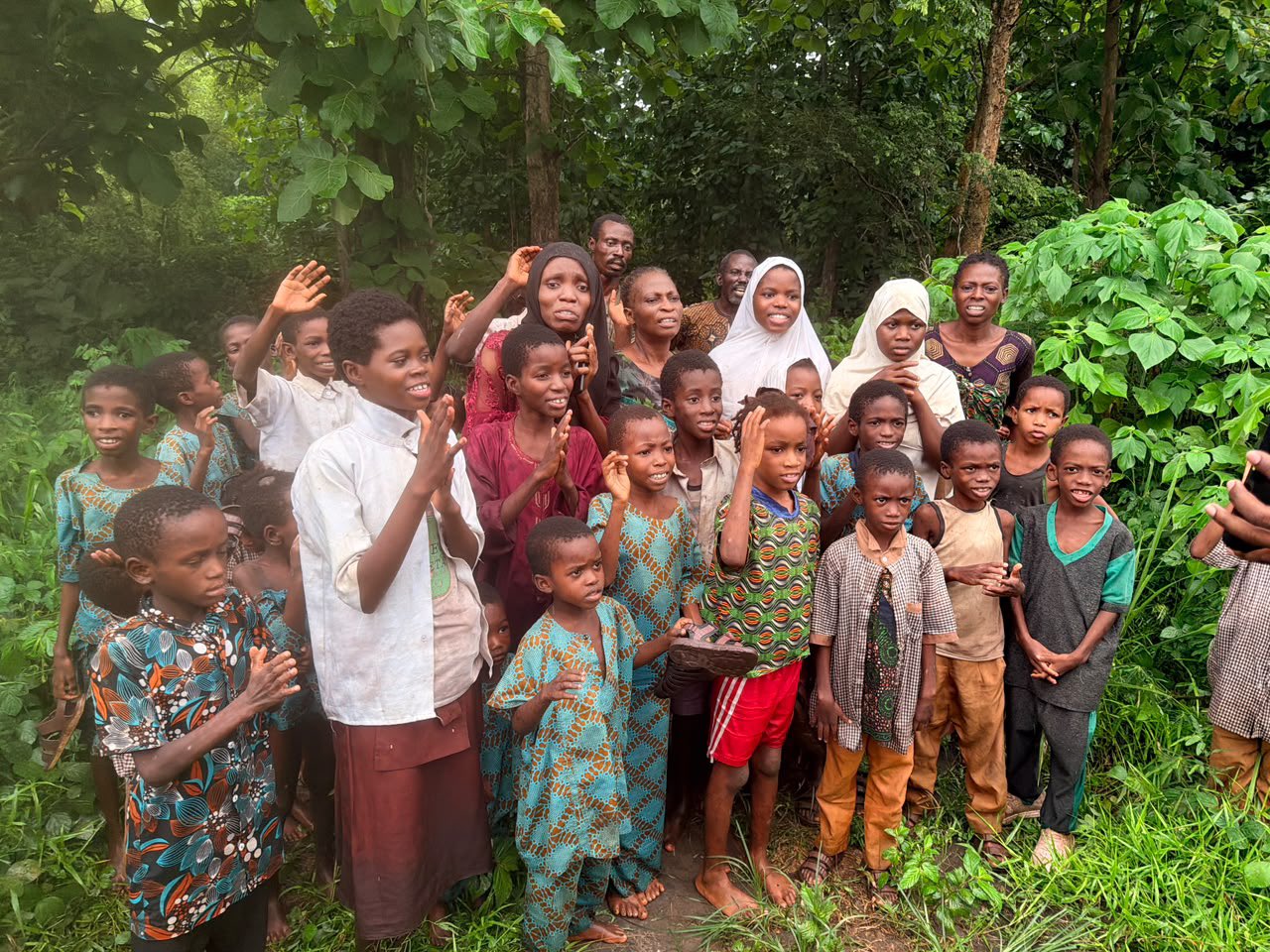
The pupils and teachers—about 44 people taken in simultaneous raids on three schools—were freed after 56 days in captivity, the President said.
The President confirmed that one teacher was killed in the initial assault and another died while being held.
“We refused to pay ransom,” Tinubu told the visiting chiefs, adding that the kidnappers had demanded the release of detained gang members in addition to money.
“We are not going to negotiate with criminals.”
The President said the episode further revealed the new tactical challenges for the country’s security services and helped justify recent changes to the military’s deployment.
“You will have seen we’ve given a geographical and numerical answer to the challenges,” he said, noting an expansion from eight to 12 army divisions intended to shorten response times.
President Tinubu also said the abductions had spurred a geo‑physical survey of forested areas in the southwest and an effort to strengthen forest guards so they can pursue criminals, not just wildlife.
He warned that incursions by fighters from neighboring Mali, Burkina Faso and Niger have compounded the threat and reinforced the need for new local security architecture.
“There will be state police, and that state police will have guardrail from abuses,” Tinubu said, urging traditional rulers to help shape and communicate the plan to state governors.
He said the federal government would protect the force from abuse while giving local authorities a role in oversight.
The President praised the Armed Forces for the rescue operation and urged citizens to be vigilant and to report suspicious people in their communities.
“Intelligence is very important,” he said.
President Tinubu has described the security challenge as a legacy issue that his administration inherited and must address.
“The immediate challenge is monumental,” he said. “It’s not an easy job, but to me, I asked for the job and I got it.”
NewsQuest reports that the Oriire kidnappings drew national attention after gunmen linked by officials to the Islamist group Ansaru attacked Baptist Nursery and Primary School (Yawota), Community High School (Ahoro‑Esinele) and L.A. Primary School (Ahoro‑Esinele) on May 15.
Our correspondent gathered that the coordinated raids leading to the rescue of the pupils typified an evolving threat landscape that blends local banditry with cross‑border militant movements.
The Olubadan of Ibadanland, Oba Rashidi Adewolu Ladoja who spoke on behalf of the delegation said the news of the abduction of pupils from schools in Oriire first brought apprehension to the citizens.
He said having seen how a coordinated approach led to the rescue of the students and their teachers, it was clear the government knew its onions in terms of securing the country.
“We’re here today to bring to the President our good tidings. We wish you well. We are very happy with what is happening in Nigeria today. We just feel that it is important for us to come and say thank you to you.
“When we had the problem of the kidnapping, which was about the first major one in Oyo State. We were apprehensive, saying what is the government doing? What is the federal government doing? What is Oyo State government doing? But we now found that between you and your security people, to which I’m going to thank them through you. You have made a turning point in the issue of kidnapping in Nigeria,” the Monarch added.
He continued that “The fact that you did not pay ransom, the fact that that you stood your ground shows that we now have a government that knows what its doing. So Mr President, we cannot thank you enough for that feat. It was a big feat because the people of Oyo State said, “are we going to become another Chibok? Is it going to be a perennial issue?
“But as I said, it has now brought a turning point in the issue of kidnapping in Nigeria, not only in Oyo State, because people now know that we now have a President who will not negotiate from the position of weakness with any kidnapper. We thank you very much Mr President, we’re very grateful”.
Ladoja however urged the Federal Government not to jettison the forest now that the students have been successfully rescued, noting that such would give the bandits opportunity to regroup.
The Olubadan who once governed Oyo State, also appreciated the President for federal projects in the state, especially road networks, saying prior to the projects, the state was in a deplorable condition.
His words,”But let me also advise, on behalf of my colleagues, that you should not please abandon that forest. You have been able to send away all the kidnappers, all the people that were there, that were threats to lives and property of people of Oyo State, you have succeeded in getting them out of the place, but please let us have the presence of the security agencies there, so that they do not re-gather.
“This is a forest that extends from Oyo State to Niger State. It is supposed to be a reserve, it starts from Iseyin, the Aseyin is here. Igboho, Kishi all along to Kwara State; Baruten, then to Niger State. So if you are able to secure the place, it means that our state is secured. So thank you very much, Mr. President, for that feast, and we hope that our wish of not abandoning the place, so that they do not re-gather again, will be acceptable to you.
“Secondly, Mr. President, we looked at the infrastructural development you are bringing to Oyo State; we have 10 ongoing projects, costing more than N2 trillion. I don’t think we have had it as good before.
“Of course, particularly in the road networks, is becoming something that we are now hopeful that by the time you complete your second term, they will be things of the past. All of us know that Ibadan-Ife (road) has been a perennial problem, but now, with the concrete that you are putting there, we believe that you have solved the problem once and for all… that goes on to Ilesa, Akure, and so on and so forth. So, please keep the good work on.”


