




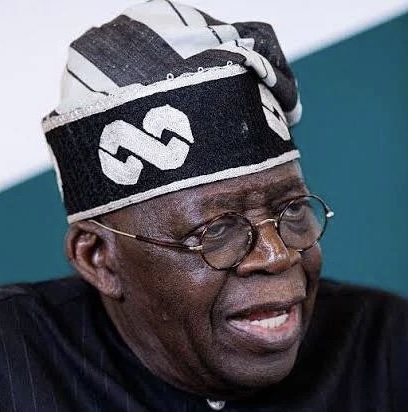


President Bola Tinubu on Friday signed an executive order establishing a coordinated Federal framework for virtual-asset oversight, seeking to patch regulatory gaps that officials say have left Nigerians exposed to fraud, money-laundering and other risks tied to cryptocurrencies and related technologies.
Special Adviser on Information and Strategy to the President Bayo Onanuga in a statement said the Presidential Executive Order on Virtual Assets Coordination, 2026, which takes effect immediately, creates a Virtual Asset Council to harmonize the work of agencies that have so far approached digital-assets issues in isolation.
He said the council will be chaired by the Central Bank of Nigeria (CBN), with the Nigeria Revenue Service (NRS) and the Securities and Exchange Commission as Vice Chairs.
The Nigerian Financial Intelligence Unit and the Office of the National Security Adviser will also sit on the panel.
The statement described the move as an effort to preserve the mandates of existing regulators while improving information-sharing and supervision across the financial, revenue and capital-markets agencies.
“This is coordination, not consolidation,” a government statement said, noting the order does not create a new regulator or transfer statutory powers.
The council will set policy direction and work with the Attorney-General to craft a harmonized legal and institutional framework aligned with national-security, economic and social objectives.
A Virtual Asset Office, housed at the Central Bank, will serve as the council’s operational arm, managing day-to-day information flows, applications and reporting through an integrated supervisory-technology platform.
The platform is intended to give participating agencies shared visibility while preserving each institution’s control over its data.
The order assigns registration responsibilities according to the nature of activity and the asset involved.
Securities-related digital assets will be registered with the SEC; payment, settlement, custody and related services involving non-security virtual assets will fall under the Central Bank’s remit.
The council is charged with resolving cases where responsibility is unclear.
NewsQuest reports that Nigeria’s approach responds to a regulatory environment that officials say has fragmentarily treated virtual assets—whose features can straddle currencies, commodities and securities—creating opportunities for unregistered and fraudulent operators to exploit oversight gaps.
According to Onanuga, the order cites risks including money laundering, terrorism financing, cybersecurity and data-privacy threats, as well as potential revenue losses.
As part of the coordination, the Central Bank is expected launch a regulatory sandbox for virtual-asset projects, permitting supervised testing of products and services to assess implications for monetary sovereignty, financial stability, market integrity, consumer protection and financial inclusion before wider deployment.
The CBN said further details of the sandbox will be announced soon.
The Nigeria Revenue Service will also publish a tax policy for virtual assets to clarify how existing tax laws apply to the sector, officials said, aiming to boost voluntary compliance and secure revenue as the market grows.
The Federal Government is also completing a Virtual Assets White Paper to outline longer-term policy priorities.
The council has been given 30 days to produce a Harmonised Implementation Framework to guide participating agencies and expedite execution of the order.