




President Bola Tinubu on Tuesday dismissed critics who have accused his administration of bias ahead of the 2027 elections, saying the complaints amounted to “crying wolf” and reflected opponents’ fears rather than substance.
Speaking at the Presidential Villa, Abuja, Tinubu said those raising alarms were “afraid of their own shadows and uncertainty in the companies they keep,” describing the charges as political posture rather than evidence of wrongdoing.


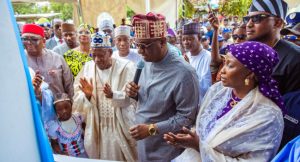
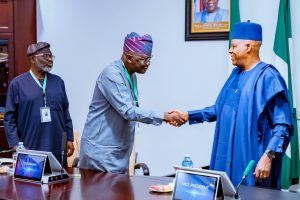
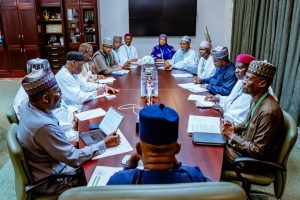
The President made the remarks while receiving leaders of the Catholic Bishops’ Conference of Nigeria, led by Archbishop Matthew Ndagoso of Kaduna.
Archbishop Ndagoso and 19 other members of the conference attended the meeting.
According to a statement by the Special Adviser on Information and Strategy Bayo Onanuga, President Tinubu said the Independent National Electoral Commission (INEC) is neutral and noting that all political parties have equal opportunities.
“The opportunities are equal. INEC is neutral. They have never intimidated anyone.
“If political opponents are crying wolf, maybe they are afraid of their own shadows and uncertainty in the companies they keep, not me,” Tinubu stressed
NewsQuest reports that ahead of the 2027 elections, the opposition parties have repeatedly accused INEC of undermining their activities to favour the ruling All Progressives Congress (APC).
Speaking on the country’s security challenges, the president said his administration is addressing them through enhanced intelligence gathering and restructuring and repositioning of security institutions.
President Tinubu assured the clerics that Nigeria would defeat terrorism and that citizens would live in peace in the country.
“We don’t have another country but here – this Nigeria. And I will refer to the national anthem that in our complexity and diversity, we shall thrive, live, rejoice and be good to all, and humanity,” he said.
“I have just approved the expansion of the armed forces. We are getting more equipment, building new barracks.
“We will defeat terrorism. It should be part of your sermons. I won’t deviate from our national anthem.”
On the nation’s economy, the president said he inherited the liabilities and the assets of his predecessor and has been steering the country since assuming office.
President Tinubu said the economy has stabilised from “bankruptcy and dark tunnel of uncertainty”, adding that prosperity is on the horizon.
“I have listened to you carefully, and most importantly, your key areas are security and education. I can tell you categorically with sincerity that the country has been placed on a sound footing,” the president said.
“The economy has recovered. The alarm for bankruptcy and dark tunnel of uncertainty that we had when I came in has been changed.
“The spirit of the people is lifting, and the economic turmoil that we feared is cleared. The economy has been delivered from bankruptcy
“I always say, because of my background and profession, that I inherited the assets and liabilities of my predecessor. I have been running with it. This government has stabilised, and there is prosperity on the horizon. Life is improving.”
While addressing the President, Ndagoso commended Tinubu for the warm reception extended to Paul Richard Gallagher, the Vatican’s secretary for relations with states and international organisations, during his visit to Nigeria.
The archbishop of Kaduna asked the president to consider the return of mission schools and fair treatment for all worshipers.
The archbishop called for free and fair elections, adding that Tinubu’s greatest legacy is the strengthening of democratic institutions.
“As a man who risked so much in the struggle for the return of democratic rule in the dark days of the military dictatorship, your greatest legacy would be the strengthening of our democratic institutions,” the cleric said.
The Catholic leaders who attended the meeting are Alfred Martins, archbishop of Lagos/CBCN vice-president; Peter Odetoyinbo, bishop of Abeokuta/CBCN secretary; Moses Chikwe, auxiliary bishop of Owerri/CBCN assistant secretary; John Onaiyekan, archbishop emeritus of Abuja; Peter Okpaleke, bishop of Ekwulobia; Ignatius Kaigama, archbishop of Abuja; Gabriel Abegunrin, archbishop of Ibadan; Valerian Okeke, archbishop of Onitsha; Emmanuel Badejo, bishop of Oyo; Gerald Musa, bishop of Katsina; and Matthew Kukah, bishop of Sokoto.
Others are Callistus Onaga, bishop of Enugu; Godfrey Onah, bishop of Nsukka; Augustine Echema, bishop of Aba; Christopher Naseri, auxiliary bishop of Calabar; Michael Banjo, secretary general; Peter Audu, director, church and society department; Michael Imhadowinyi; and Dickson Adeyanju.


