







President Bola Tinubu on Monday urged a shift from purely military responses toward community-driven, development-led strategies to tackle insecurity in North Central region, saying that long-term peace would come only by addressing the underlying economic and social causes of violence.
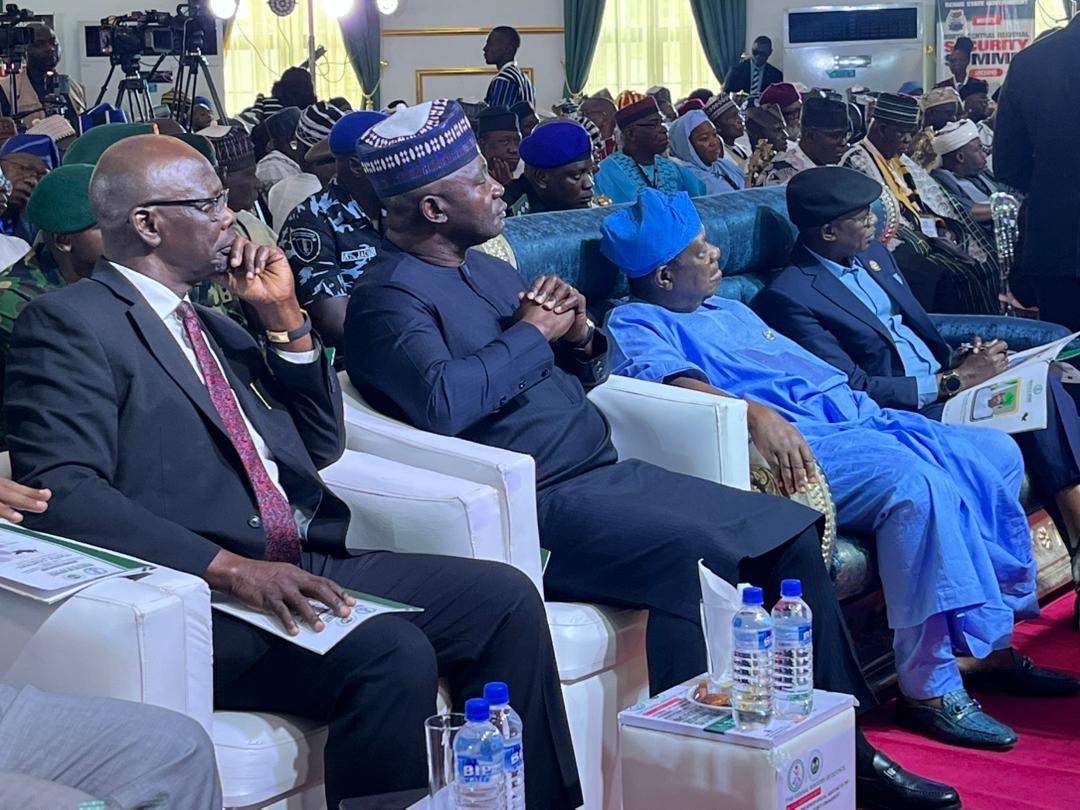
Speaking as a special guest of honour at the 2026 North Central Regional Security Summit in Makurdi, the Benue State capital, President Tinubu who was represented by the Secretary to the Government of the Federation (SGF) George Akume, praised the people of Benue State for hosting the meeting and described the region as “the Food Basket of our Nation,” saying it was the right place to hold a conversation about security and stability.


“This Summit is the second in a series of regional engagements convened by the Ministry of Defence,” Tinubu said, referring to a follow-up process that began with a South East regional summit in Umuahia on July 30.
He commended the Defence Minister, retired General Christopher Gwabin Musa, and presidential aides for sustaining the initiative, which the president framed as central to his “Renewed Hope Agenda.”
No single agency, no single tier of government and no single community can secure this region acting alone, President Tinubu warned, calling attention to what he described as damaging delays and duplication between agencies.
“Insecurity does not respect state boundaries or agency mandates,” he said, adding that criminals move freely across local government areas while responses are often slowed by rivalry and the withholding of information.
The President outlined steps his administration has taken to strengthen national security, noting increased collaboration among the Armed Forces, the Nigeria Police Force and intelligence services; new platforms for the Army, Navy and Air Force; and reforms intended to rebuild Nigeria’s domestic defence industry under the DICON Act.
The President also said troop welfare had been improved, arguing that better-equipped and cared-for soldiers fight with “greater resolve.”
Tinubu credited security forces with notable operational gains, saying “terrorist commanders have been neutralised, thousands of fighters have surrendered” and captives freed in areas that had formerly been terrorised.
The President who paid tribute to fallen servicemen and women and to police and other personnel serving in the region was also blunt that military action alone cannot produce lasting stability.
He identified competition over land and water, climate-driven pressures, unresolved land-use disputes, weak local dispute-resolution mechanisms and the proliferation of illicit weapons as the structural conditions that give rise to violence.
“If we address only the symptom and never the cause, we will be back in this hall in ten years having the same conversation,” he warned.
To address both security and development, President Tinubu highlighted several policy measures: a transition from open grazing to settled, modern livestock production being pursued by the Ministry of Livestock Development; a Reclaiming the Ungoverned Space for Economic Benefits Programme under the Ministry of Defence that will draw on retired military personnel to help secure and revive communities; and investments in irrigation, mechanised agriculture, rural roads and credit access under the Renewed Hope Agenda.
The President also appealed directly to traditional rulers and religious leaders to act as early-warning networks and voices of reconciliation, saying their local authority is essential to prevention.
He urged them to reject inflammatory rhetoric that can inflame communal tensions.
Addressing citizens, especially women and youth, President Tinubu called for cooperation with security agencies and an end to sheltering criminals out of kinship.
He singled out women as “the most effective peacebuilders” and said young people’s energy must be harnessed through opportunities so a weapon becomes less attractive than a livelihood.
The President also extended an invitation to development partners and the private sector to invest in the region, arguing that “every factory built, every farm expanded and every young person employed in this region is a contribution to its security.”
He said he expected the summit to produce “clear and practical recommendations” with identified owners, timelines and measurable outcomes, and directed the Defence Minister to forward the summit’s outcomes to him with reports on implementation.
Tinubu declared the summit open after urging frank and constructive discussion, and said the government would be judged on whether farmers and ordinary citizens felt safer a year from now.
NewsQuest reports that the North Central summit brings together governors, ministers, service chiefs, traditional and religious leaders, civil society, private-sector representatives, women and youth groups in an effort to build coordinated responses to the region’s complex security challenges.


