






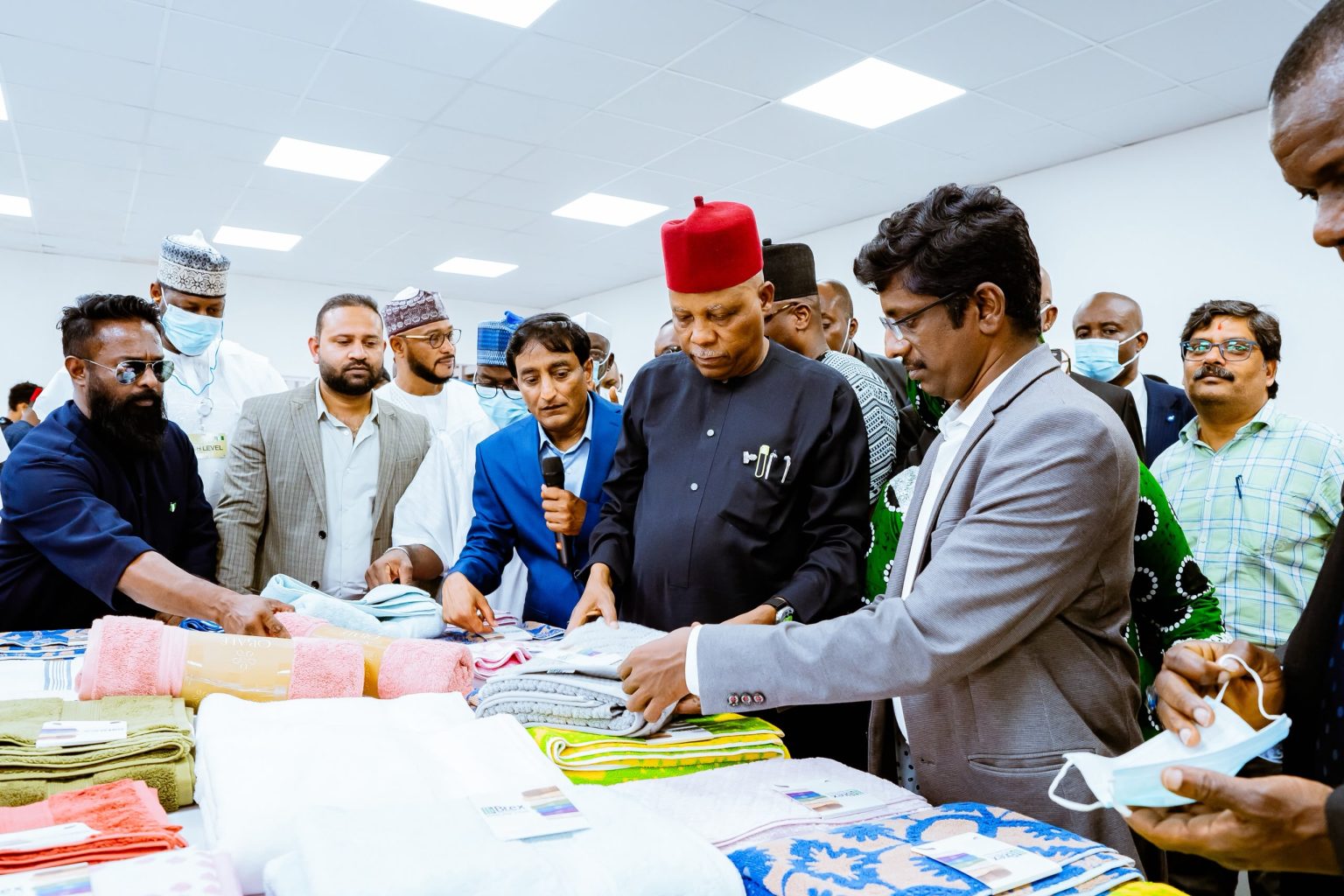


Vice President Kashim Shettima on Friday said that African countries must seize greater control of global resources and trade by turning raw commodities into higher‑value goods, following a tour of a large industrial park here that has linked cotton and other crops to manufacturing.
Shettima led a delegation of Nigerian State Governors state through the Glo‑Djigbé Industrial Zone, a 1,640‑hectare public‑private platform developed by the Beninese government with ARISE Integrated Industrial Platforms.


NewsQuest reports that the complex, which began production in 2021, houses integrated textile and agro‑processing facilities that convert locally grown cotton into yarn, fabric and finished garments, and process cashew and soybeans for domestic and export markets.
The site employs more than 25,000 people, Beninese officials told the delegation.
“This is an African success story,” Shettima said, invoking President Bola Tinubu’s “Renewed Hope” economic agenda.
He said Nigeria plans to replicate parts of the model at home, including establishing eight agro‑industrial zones in eight states.
“We are setting up eight agro-industrial zones in eight states in our country,” he said, adding the aim is to accelerate industrialization and broaden non‑oil exports.
Vice President Shettima described the visit as part of a broader effort to shift Africa’s role in global value chains.
He highlighted the imbalance in the cotton market, saying Africa currently captures roughly 1% of the $370 billion global cotton value — a shortfall he attributed to weak downstream processing on the continent.
To signal a commitment to environmentally responsible development, Shettima and the visiting governors planted trees at the industrial zone before departing.
Reviving Nigeria’s textile value chain, he argued, could create millions of jobs and stimulate wider economic activity.
Benin’s industry and investment Minister, Olushegun Adjadi Bakari, briefed the Nigerian delegation on the zone’s design, production capacity and investment potential.
The facility’s combination of agro‑processing and manufacturing is intended to attract private capital while ensuring locally produced commodities move up the value chain, officials said.
Governors accompanying Shettima — representing Kwara, Imo, Jigawa, Katsina, Plateau and Zamfara States — expressed interest in launching similar projects domestically.
They cited opportunities for public‑private partnerships, youth employment, technology transfer and stronger links between farmers and manufacturers.
Analysts say the appeal of models like Glo‑Djigbé rests on their ability to reduce dependence on raw‑commodity exports and increase export revenues through finished goods.
For Nigeria, which is seeking to diversify away from oil, the replication of integrated industrial platforms could bolster job creation and help meet the Tinubu administration’s industrialization goals.


