





Nigeria and India have agreed to work toward restoring bilateral trade to its previous peak of nearly $15 billion, with New Delhi seeking to resume larger purchases of Nigerian crude oil.
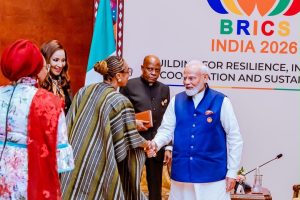
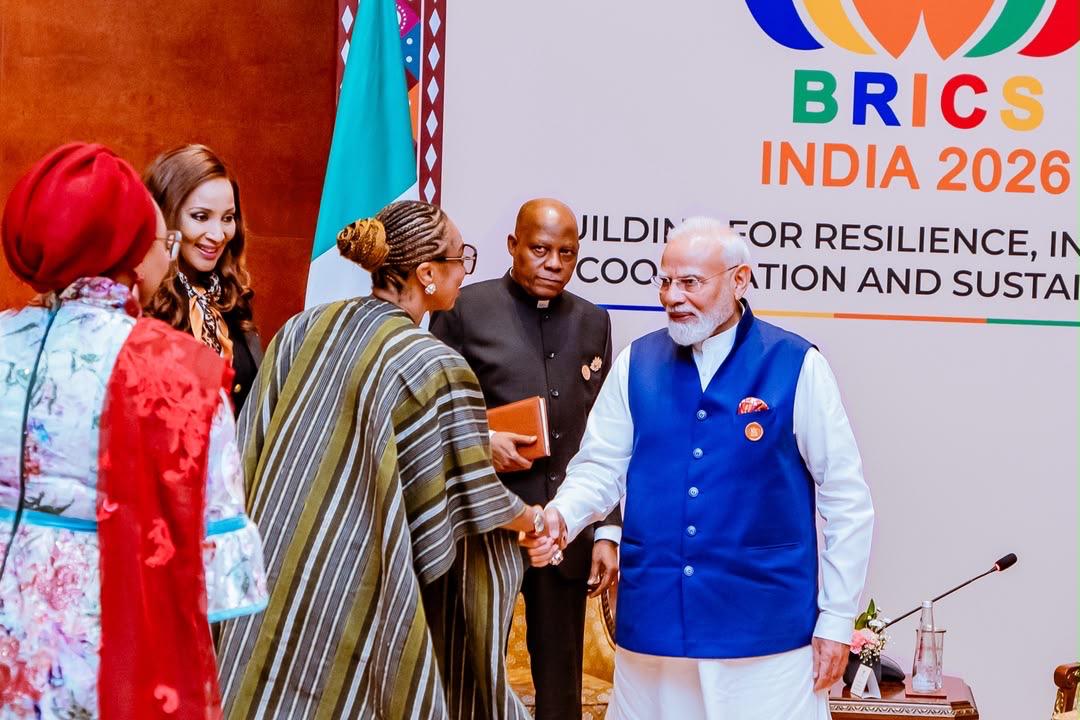
The commitment was reached during a meeting between Vice President Kashim Shettima and Indian Prime Minister Narendra Modi on the sidelines of the BRICS Leaders’ Summit.
Trade between the two countries declined to $7.13 billion in the 2024–2025 financial year from $14.95 billion in 2021–22, largely because of a drop in India’s crude-oil purchases from Nigeria.
Bilateral trade recovered to about $9 billion in 2025–26, according to the officials.
Modi said restoring energy trade would be central to efforts to return commercial exchanges to their earlier levels.
The vice president said President Bola Ahmed Tinubu’s administration would review India’s request to resume crude purchases.
The discussions reflect an effort by both countries to broaden economic ties beyond oil and other commodities.
He said Nigeria wants to attract investment that supports local manufacturing, creates jobs and transfers technology to the country’s young population.
The two sides identified fintech, digital public infrastructure and the creative industries as areas for expanded cooperation.
They also agreed to explore partnerships in defense technology, power generation and clean energy, while encouraging investment in pharmaceuticals, health care and skills development.
Imaan Sulaiman-Ibrahim, Minister of Women Affairs, said the country is adapting India’s women-led self-help-group model through the Nigeria for Women Programme Scale-Up.
The initiative uses Women Affinity Groups to promote financial inclusion, grassroots businesses and social protection.
Nigerian officials have linked the program to the government’s broader ambition of building a $1 trillion economy.
At the BRICS summit, Nigeria also called for changes to global governance institutions and the international financial system, arguing that they no longer reflect current economic and demographic realities.
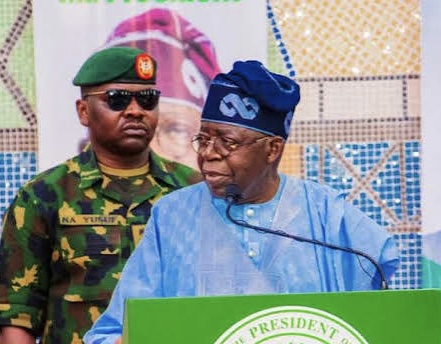
“Nigeria supports a more representative, equitable and responsive global governance architecture, including reform of the United Nations Security Council and the international financial system,” Shettima said.
“BRICS amplifies the voice of the Global South and advances a more inclusive international order”, he added.
The vice president urged BRICS members to move from declarations to measurable results.
He positioned Nigeria as a gateway to Africa’s market through the African Continental Free Trade Area, which creates a framework for reducing trade barriers across the continent.
He cited initiatives including 3MTT, Project BRIDGE and national artificial-intelligence programs as examples of Nigeria’s efforts to develop a technology-driven economy.
“Nigeria’s young population”,he said, ” is helping drive advances in artificial intelligence, fintech and digital public infrastructure”.
“We welcome deeper BRICS cooperation in artificial intelligence, digital public infrastructure, fintech, telecommunications, cybersecurity, biotechnology and advanced manufacturing,” he said.
“Developing countries must produce technology, create knowledge and own intellectual property. A nation that owns no technology risks renting its future,” he added.
He stated that the goal of the partnerships was to create jobs, expand trade, transfer technology and strengthen domestic production.
“Africa must move from the margins of global development to the frontiers of global growth and innovation,” he said.
The Indian Prime Minister opened the summit by emphasizing BRICS’ diversity and its role in expanding cooperation beyond governments to entrepreneurs, farmers, researchers, women and young people.
He cited BRICS CONNECT as one vehicle for that engagement and said economic development must be balanced with environmental sustainability.
“We may be rooted in different realities, but together, we rise through cooperation and blossom for humanity,” Modi said.