



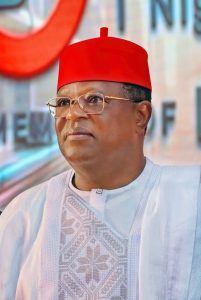



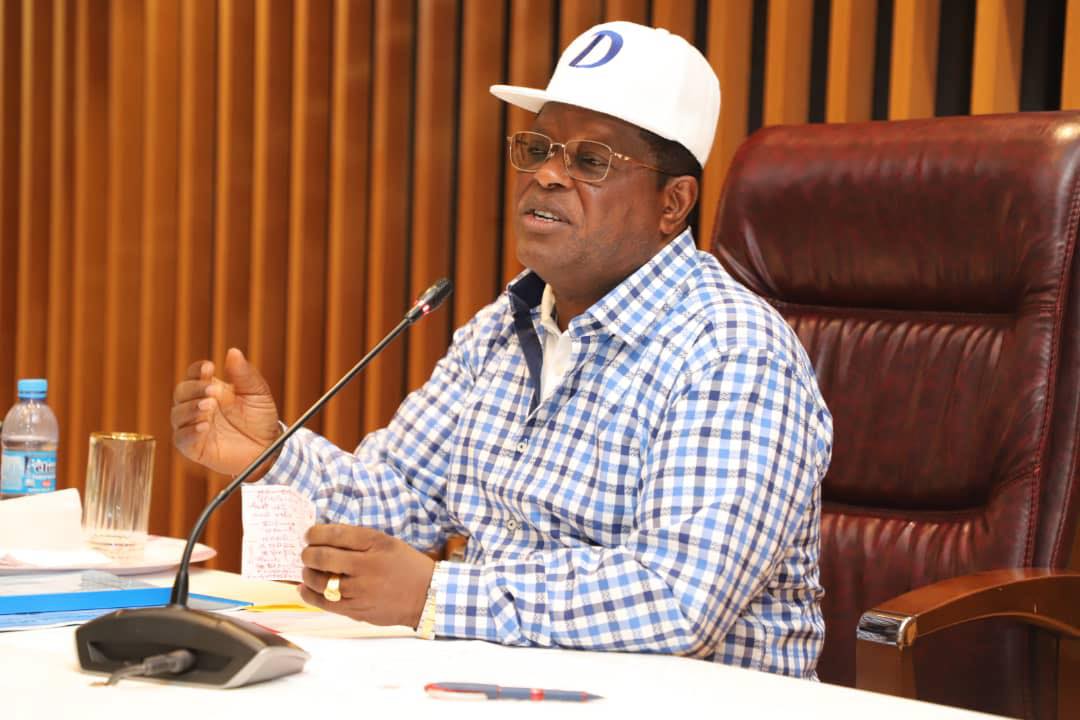


Minister of Works Dave Umahi has said the Lagos-Calabar Coastal Highway is being built with reinforced concrete pavement intended to last 50 to 100 years with minimal maintenance, part of a broader effort to reduce the country’s costly pattern of repeatedly rebuilding asphalt roads.
The Minister stated that the technology is central to the government’s strategy for major freight corridors, where heavy trucks and coastal conditions accelerate road deterioration.
“We are talking of a 50-to-100-year guarantee for reinforced concrete pavement, with low maintenance,” he said.
Work on the 55-kilometre second section of the highway is advancing, with the concrete pavement expected to be completed in November, Umahi said.
The section runs from Eleko to the Lagos-Ogun border and is part of the roughly 750-kilometre coastal corridor linking Lagos to Calabar.
Bridges and flyovers will take longer because of engineering demands around the Dangote Refinery and Lekki Deep Sea Port corridors.
The structures must carry heavy-duty trucks while accounting for challenging soil conditions in the area, according to the minister.
The project also incorporates drainage infrastructure intended to manage flooding along the low-lying coastal route.
Umahi disclosed that workers are installing five-foot drainage channels on both sides of the road, with culverts designed to connect into Lagos State’s drainage network and discharge into the lagoon.
The design reflects a recurring challenge for Nigerian infrastructure: roads must withstand both intense rainy-season runoff and the traffic generated by ports, refineries and industrial zones.
The Federal Ministry of Finance has likewise described the highway as using continuously reinforced concrete pavement with a minimum 50-year design life and low maintenance requirements.
The coastal highway is one of President Bola Tinubu’s signature infrastructure projects, and the government has framed it as an economic corridor rather than merely a transport link.
However, its long-term value will depend on whether the concrete pavement and drainage systems perform as promised under heavy use and Nigeria’s coastal climate.
For now, officials are presenting durability as the project’s central selling point: fewer reconstruction cycles, lower maintenance spending and a road built for the freight traffic expected along the Lagos-Lekki industrial corridor.


