




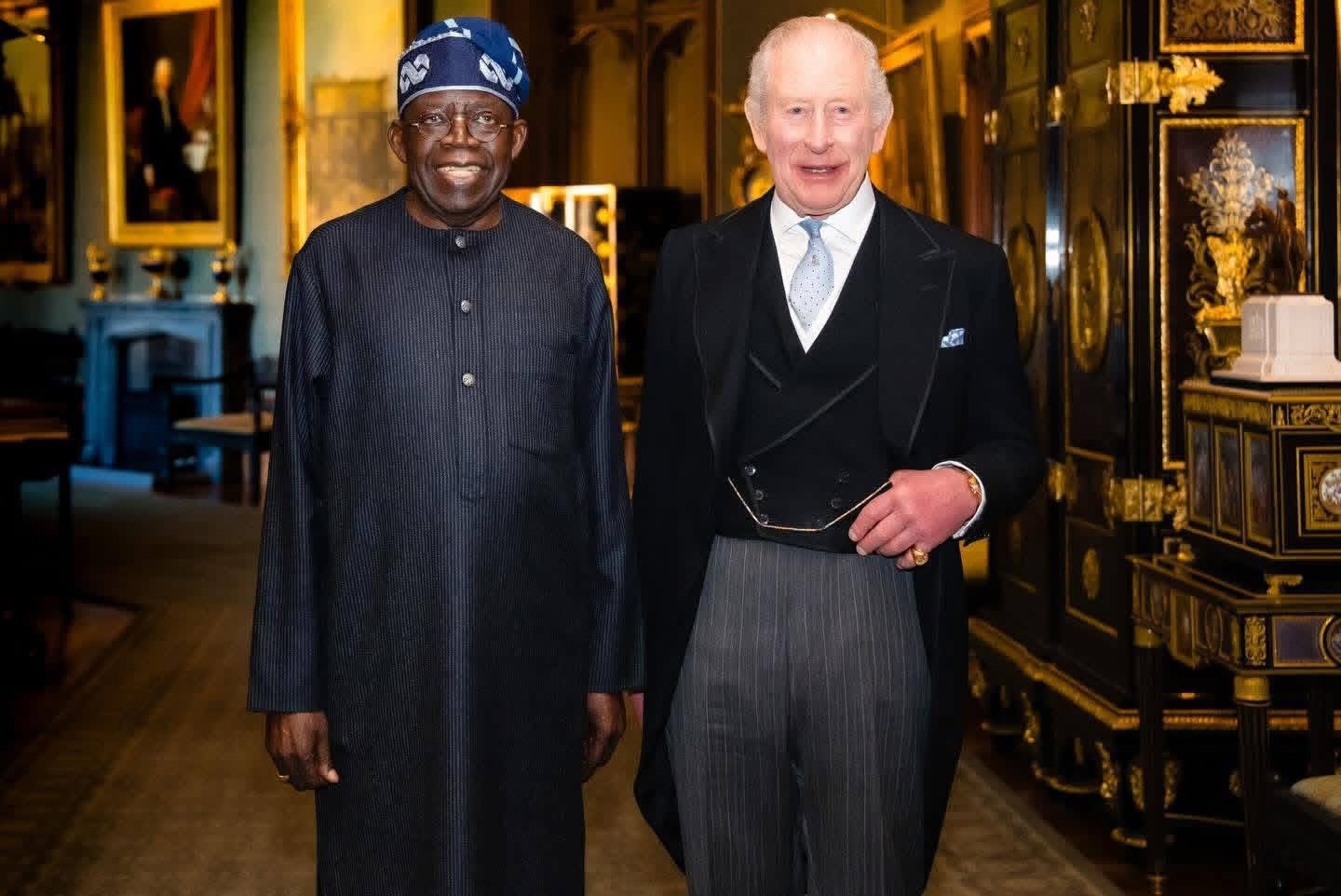


King Charles III welcomed Nigeria’s President Bola Tinubu to Windsor Castle with a speech that blended personal reminiscence, cultural humor and a forward-looking embrace of the two nations’ deepening ties, even as he gently acknowledged the shadows of their shared colonial past.
“Your Excellency, Mr. President, and Distinguished First Lady,” the king began, greeting his guests in Yoruba — “Ekabo. Se Daaa Daa Ni” — before expressing delight at hosting them amid Ramadan.


“Ramadan Mubarak!” he declared, noting the sacrifice of travel during the holy month.
The address, delivered during a state banquet, painted Nigeria not as an emerging power but one that “has arrived” — a nation of 230 million, half under 18, brimming with energy to tackle global challenges.
King Charles recalled his 1989 visit to Nigeria, 36 years to the day, and marveled at the influence of its diaspora in Britain: from Afrobeats in concert halls and Nollywood on screens to Nigerian stars in the Premier League and on the bench of Britain’s highest courts.
“We in the United Kingdom are blessed that so many people of Nigerian heritage… are now at the heart of British life,” he said, citing encounters with “quiet heroes” in schools, the National Health Service and his King’s Trust.
He drew laughter with a nod to a recent “Jollof and Tea” party at St. James’s Palace, where guests debated the dish’s origins — Nigerian, Ghanaian or Senegalese — and he “diplomatically” claimed amnesia.
Economic bonds took center stage as King Charles highlighted Nigerian banks basing in London, companies listing on the London Stock Exchange, and mutual tourism spending topping £178 million in 2024.
Nigeria, he noted, became Britain’s top African export market this year, with “Made in U.K.” goods now carrying “a distinctively Nigerian flavour.”
The king did not shy from history’s “painful marks.”
“I do not seek to offer words that dissolve the past, for no words can,” he said.
King Charles urged building a future “rooted in hope and growth for all,” pointing to an afternoon meeting with British Christian and Muslim leaders as a lesson in interfaith harmony from Nigeria.
In a nod to global shifts, King Charles invoked Yoruba wisdom — “rain does not fall on one roof alone” — and Hausa and Igbo proverbs to explain Commonwealth potential.
He praised President Tinubu’s drive for intra-Commonwealth trade through deals like the U.K.-Nigeria Enhanced Trade and Investment Partnership, ahead of this year’s Commonwealth Heads of Government Meeting.
King Charles ended hisn speech with Eid greetings and a toast: “To the President and people of Nigeria — ‘Naija No Dey Carry Last!’” — Nigerian Pidgin for “Nigerians never come last.”
Tinubu’s three-day visit, the first state visit by a Nigerian leader in over a decade, is an indicative of Britain’s post-Brexit pivot toward Commonwealth partners amid economic pressures. Analysts see it as a bid to counter China’s influence in Africa, with deals on trade, security and green energy in the works.
The warm reception reflects Nigeria’s clout: its diaspora of over 500,000 forms a “living bridge,” as Charles put it, enriching both nations. Still, challenges linger — from Nigeria’s security woes in the north, which Britain aids via Quick Reaction Forces, to debates over reparations that the king’s measured words sidestepped.
As guests raised glasses, the evening affirmed a partnership of “equals,” one poised to evolve as the world’s dance steps change.


