





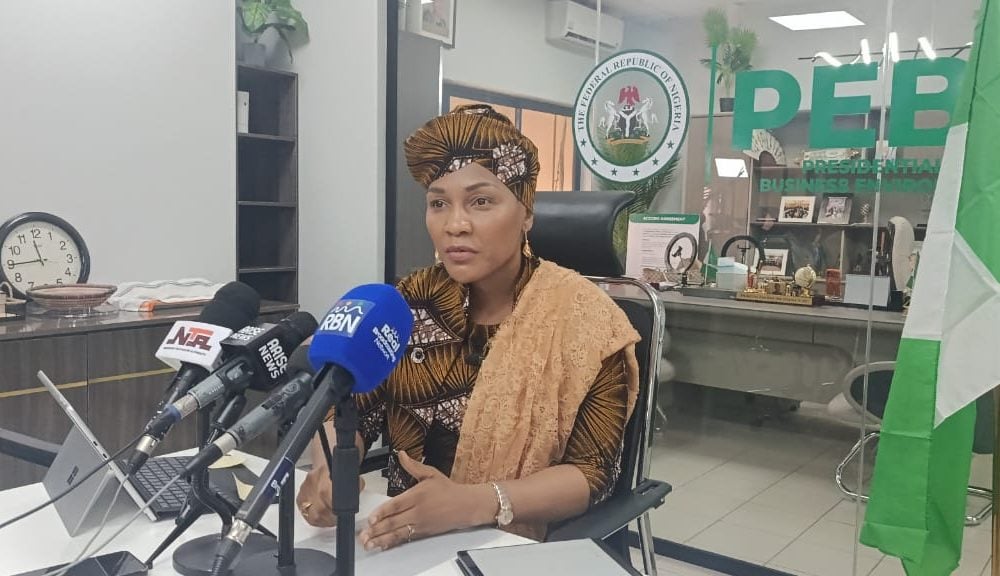


Director-General of Presidential Enabling Business Environment Council (PEBEC), Princess Zahrah Mustapha Audu has urged critics and supporters alike to judge President Bola Tinubu by the institutions he has built and the reforms he has driven, not by disputed chapters of his personal biography.
In a commentary published this week, Audu invoked the political evolutions of Nelson Mandela and Ghana’s Jerry John Rawlings to make a broader point:
“Consequential leaders are rarely defined by a single controversy, and history tends to weigh what they changed more heavily than where they stumbled”, she said.
Audu’s intervention arrives as public debate continues over President Tinubu’s educational credentials and the economic reforms his administration has pursued since taking office in May 2023.
She argued that the proper response is neither hagiography nor wholesale dismissal.
“His certificates may be questioned. His biography may be contested. But his political accomplishments cannot simply be written out of history,” she said.
On the specific question of Tinubu’s schooling, she pointed to 2023 U.S litigation involving Chicago State University, in which the university’s registrar confirmed that he attended and graduated in 1979, even as disputes persisted over the authenticity of a diploma copy submitted to electoral authorities.
Her conclusion: scrutiny is legitimate, but it must be bounded by evidence.
“Political achievement cannot make legitimate questions disappear. Neither should legitimate questions be exaggerated beyond the evidence in order to invalidate everything that followed,” she said.
To illustrate her point, the DG cited Mandela’s journey from imprisonment and armed resistance to becoming South Africa’s first democratically elected president and a central figure in its constitutional transition.
She similarly referenced Rawlings, who moved from military intervention and revolutionary rule to elected constitutional leadership in Ghana.
She stressed that the comparison was not meant to equate Tinubu with either figure, but to underscore a historical lesson: political identities evolve, and legacies should be assessed across the full arc of a leader’s career.
“History rarely evaluates consequential political figures from a single chapter of their lives,” she argued.
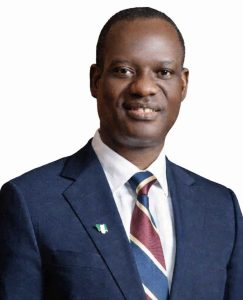
Audu contended that President Tinubu’s political career itself constitutes a substantial body of evidence for any assessment of his leadership.
She traced his trajectory from the Third Republic Senate and the pro-democracy struggle, through exile, to two terms as governor of Lagos State beginning in 1999, and later to opposition politics and the coalition-building that produced the All Progressives Congress (APC).
In her view, those decades of activity, culminating in his emergence as president, demonstrates a pattern of institution-building and political transformation that should form part of the historical ledger alongside current controversies.
Her central claim is that biography should be scrutinized, government should be criticized where evidence warrants it, and achievements should be subjected to the same evidentiary standard, and commendation.


