



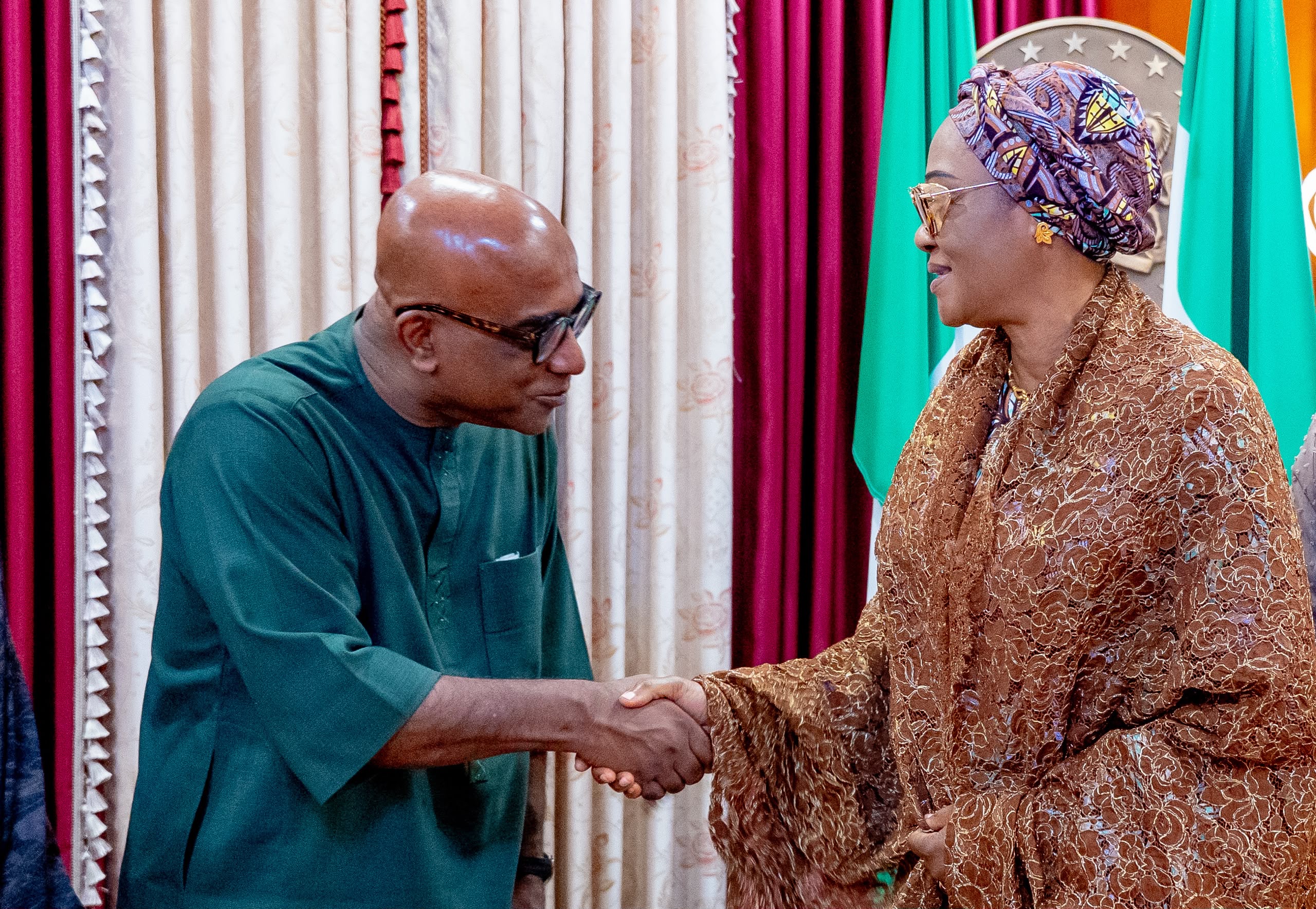


First Lady Oluremi Tinubu, on Monday met with a World Bank delegation in Abuja where she stressed that investment in early childhood development (ECD) is essential both to expand opportunities for children and to strengthen the nation’s future workforce.
Mrs. Tinubu said the Federal Government must pursue programmes that sharpen children’s “focus” and broaden growth prospects, and described Nigeria’s large population as a national advantage.
“The population size of Nigeria alone is our advantage, because Nigeria is a great nation,” she said.
She cited ongoing government efforts on environmental sanitation and a “Green Challenge” that she helped launch, and praised what she described as a coordinated, multi‑sectoral approach under President Bola Tinubu’s team.
On health issues such as tuberculosis, she said, authorities have stepped up awareness campaigns.
According to a statement by Busola Kukoyi Senior Special Assistant on Media to the First Lady, Mrs. Tinubu also pledged continued collaboration with the wives of state governors to roll out child‑focused interventions, and signaled close presidential support for a school‑feeding program she expects to be established during the current administration.
“We are looking forward to school feeding. I can assure that before we finish our tenure, it would have been properly established,” she said.
Dr. Mathew Verghis, World Bank country director for Nigeria, urged expanded partnerships with Nigerian leaders to scale up ECD programmes, describing early childhood investment as “Nigeria’s most critical long‑term investment.”
He said the bank’s country strategy emphasizes nutrition, health and learning from pregnancy through age five, and that those investments deliver strong long‑term returns by improving cognitive outcomes, lowering health costs and breaking poverty cycles.
“Every five or six years, we reframe our programmes in Nigeria,” Dr. Verghis said.
“Nigeria is unsurprisingly one of the World Bank’s largest partners and our office here is one of the largest in the world.”
He added that the bank’s targets for health, broadband and energy will rely on Nigeria’s success.
Dr. Verghis acknowledged a political challenge: the fiscal and social returns from ECD often appear only after many years, requiring sustained leadership.
He urged the First Lady to use her platform to accelerate a whole‑of‑government, multi‑sectoral rollout of the program, which is currently in a technical and analytical phase and intended to run over the next five years.
The World Bank delegation, led by Dr. Verghis, briefed the First Lady on the bank’s early‑years programme and praised alignment between the bank’s agenda and her office’s initiatives, particularly on child nutrition.