







Benue State government plans to hand a 25‑year concession over tens of thousands of hectares to a private developer in a deal that will create an integrated agro‑industrial hub and cement the state’s status as a national food-production center.
The Benue State Executive Council on September 2 approved the National Food City Complex (NFCC), a public‑private partnership between the state and Rexzodeneh Group Ltd. (RGL).
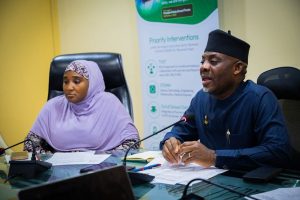
In a statement by the Commissioner of Information and Orientation Solomon Iorpev said the State is contributing roughly 30,000 hectares of land across Otukpo, Obi and Ado local government areas as its equity stake in a project public documents value at more than $250 million.
The formal concession agreement will be signed Monday, the statement said.
According to Iorpev, RGL will finance, build and operate the complex under a 25‑year design‑build‑operate‑transfer (DBOT) concession.
“At the end of the term, ownership reverts to the state at no additional cost, officials said. Benue’s equity—about 10%—is provided in the form of land and infrastructure; communities are to receive a 5% stake tied to scholarships and other benefits,” the statement added.
Technical support comes from M.K. International Inc., a South Korean firm as the Benue Investment Promotion Agency (BENIPA) has already carried out due diligence, including technical appraisals and verification of financing partners.
Commissioner Iorpev also said that Phase I will cover roughly 12,000 hectares at Ogyoma‑Akpa in Otukpo.
Planned processing lines include rice (300 tonnes per day), maize (250 tpd), cassava (300 tpd), soy (250 tpd) with a 50‑tpd oil refinery, and a 300‑tpd poultry‑feed mill.
The site will host a 20–25 MW hybrid power plant combining gas, solar and bioenergy, along with staff housing, clinics, internal roads and warehousing.
The Information Commissioner said the project is expected to create more than 20,000 permanent jobs and integration of over 40,000 smallholder farmers into guaranteed offtake arrangements.
The statement said an A 12‑kilometer access road has been awarded, and a $30 million security architecture budget set aside for the zone and its environs, state documents show.
Benue State government has described the NFCC as a way to attract private capital without direct fiscal outlay, accelerate industrial processing of staples, broaden internally generated revenue and reduce reliance on wheat and other imports.
For the private partner, the deal offers long‑term control of processing capacity and preferential access to regional output.
NewsQuest reports that the project could be a model for state‑level agro‑industrialization in Nigeria, if it overcomes familiar hurdles: reliable power, predictable logistics, transparent offtake arrangements and enforcement of land and labor commitments.
The DBOT structure shifts construction and operational risk to the private sector but leaves political and regulatory risk with the government.
The partnership traces to an April 8, 2025 memorandum of understanding; a formal PPP agreement followed on May 9, 2025. State and RGL officials signed the pact at the Ministry of Agriculture in Makurdi.
The signing scheduled for Monday (tomorrow) will finalize the concession terms.


