

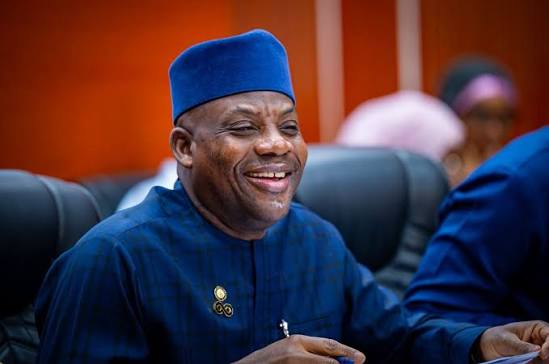
The Federal Government has assured workers in tertiary institutions that it will no longer default on signed agreements, pledging timely implementation to ensure industrial harmony across campuses nationwide.
Minister of Education Dr. Tunji Alausa said in Abuja Tuesday that the government would fulfill its obligations under the 2026 agreements, which cover allowances for academic and non-teaching staff.
“We will fulfil our part of this historic agreement,” he said at the agreements’ unveiling, adding that “Public confidence will depend on the obligations we honour after this ceremony.”
The agreements include the Consolidated Academic Tools Allowance, known as CARTA or CATA, for academic unions, and the Consolidated Non-Teaching Tools Allowance, CONTA or CONTTA, for non-teaching staff.
Both took effect in January 2026, and the Minister said payments had been made to tertiary institutions.
Alausa said the move was intended to end a pattern in which past government-union agreements were delayed, partly implemented or abandoned, fueling distrust and prolonged strikes.
He said students had lost months or years of study, families had borne added costs, and teaching and research had suffered.
The minister linked the agreements to President Bola Tinubu’s pledge that students should complete four-year degree programs within four years.
“A promise made, a promise kept, and trust restored,” he added.
He said the government would expand the implementation and monitoring committee originally created for its agreement with the Academic Staff Union of Universities ( ASUU) into a single platform covering academic and nonacademic unions across the tertiary-education system.
The aim, he said, is to identify and resolve disputes before they lead to strikes.
The latest ceremony extended arrangements previously unveiled for ASUU in December to other academic and nonacademic unions in universities, polytechnics and colleges of education.
The government has already released eight months of arrears under the non-academic allowance, covering January through August 2026, according to officials and union statements.
The academic allowance was also released for the same period, the Minister said.
The payments followed pressure from the Senior Staff Association of Nigerian Universities (SSANU), which issued a 14-day ultimatum over implementation of its 2026 agreement before the government released the funds.
The agreements include a three-year review mechanism, according to the Minister, a provision intended to give unions and government a regular forum to address implementation problems.
Tertiary institutions have been repeatedly shut by strikes over pay, funding and unimplemented agreements, making labor relations a persistent test for successive administrations.
The Tinubu government has presented timely payment and monitoring as central to keeping campuses open.
The Minister of State for Education said the agreements marked a milestone in improving staff welfare and industrial relations.
He described them as an opportunity to rebuild trust and create conditions for a more stable and productive tertiary-education system.
The government’s challenge now is execution: unions have historically judged commitments by payments and implementation, not ceremony.
Alausa acknowledged that point, saying public confidence would depend on whether the government honors the obligations it has just formalized.
