

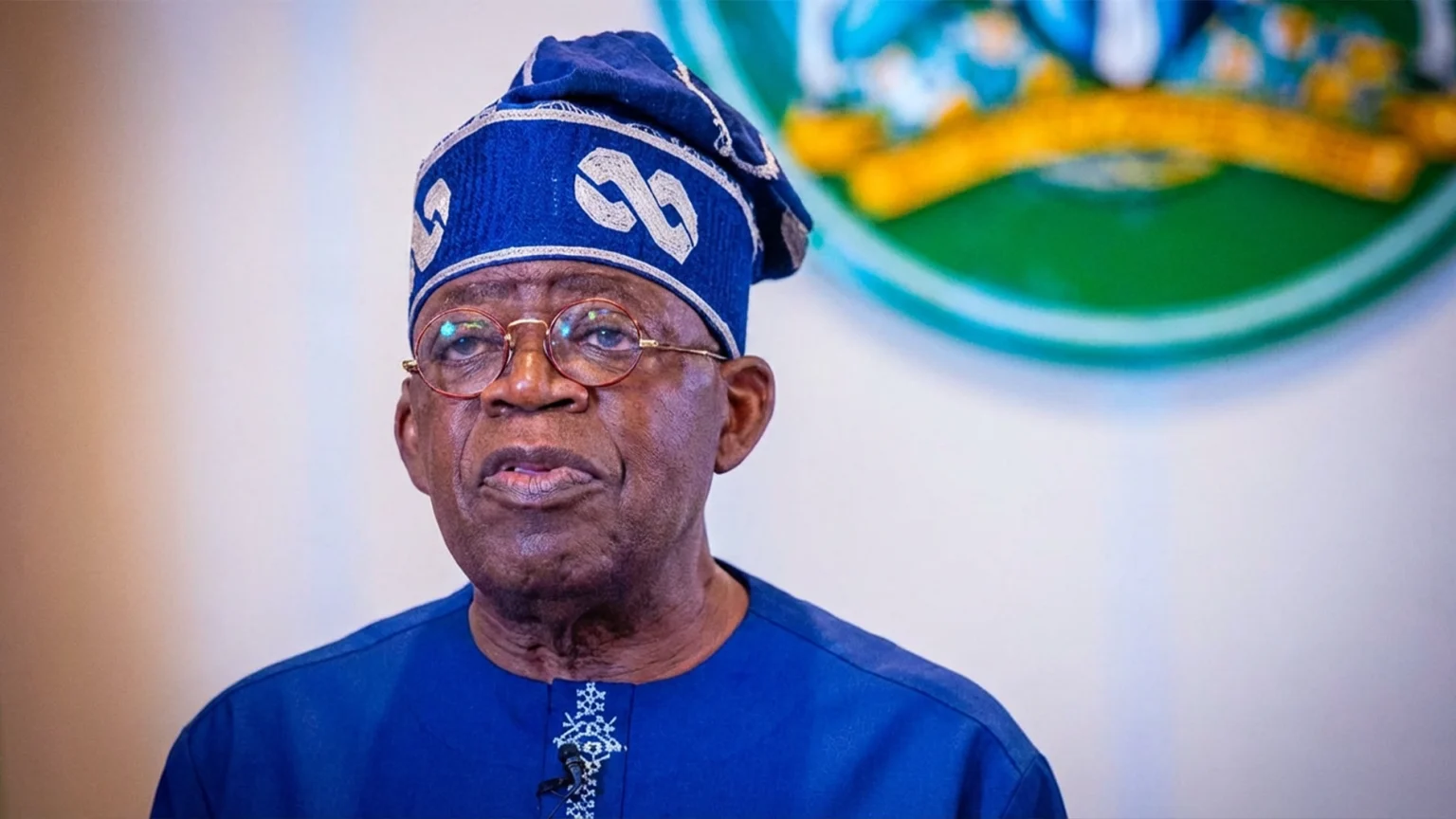
President Bola Tinubu has directed that a property recovered by the Economic and Financial Crimes Commission (EFCC) to be handed over to the Nigeria Data Protection Commission(NDPC) as its new permanent headquarters in Abuja, a move described as putting assets once tied to corruption to work safeguarding citizens’ digital rights.
The announcement came on Monday at the commissioning of the facility in the Mbora District, where Communications, Innovation and Digital Economy Minister, Bosun Tijani said the president acted following complaints that its expanding mandate and international profile were outpacing its office.
“What was associated with the consequence of corruption is today becoming the headquarters of an institution dedicated to protecting Nigerians and strengthening trust in our digital economy,” Tijani said, describing the handover as an example of recovered assets being returned to productive use.
The Minister said the commission had struggled with funding in its early years, at times unable to meet salary obligations, before President Tinubu intervened with direct financial support until the agency could generate enough revenue to sustain operations.
He noted that the president signed the Nigeria Data Protection Act shortly after taking office in 2023, giving the commission statutory authority to protect the privacy and personal data of Nigerians, and subsequently ordered ministries, departments and agencies to comply with the country’s data-protection laws.
NDPC National Commissioner and Chief Executive Officer, Vincent Olatunji said the agency received approval for the EFCC property in July, 2025, with renovation work beginning in March, 2026.
He recalled that the commission started in February, 2022 with about 12 employees, no dedicated budget and limited office space, adding that he initially used personal funds to keep operations running.
The agency later received its first major funding support of fifty million naira from the National Information Technology Development Agency( NITDA) in September, 2022″, Olatunji said.
“Since then, the commission has licensed 356 Data Protection Compliance Organisations, whose activities together with the regulator’s own work have created more than 27,000 jobs in three years”, he said.
The NDPC has generated over twelve billion naira in revenue in that period, while the broader data-privacy and protection ecosystem is now valued at more than eighteen billion naira, according to the commissioner.
“More than sixty-six thousand Nigerians have been enrolled in the agency’s virtual privacy academy, and 220 training programmes have benefited 99,370 people” Olatunji said.
The commission has also established 17 data-privacy clubs in universities, created 6,176 student ambassadors and reached more than 250,000 Nigerians through its engagements, he added.
On the international front, representatives from 17 countries have visited Nigeria in the past two years to study the NDPC’s model, while the agency has signed 28 memoranda of understanding with organisations and data-protection authorities in countries including Canada, Morocco, Liberia, Kenya and Ghana.
“The new headquarters, with about 56 office spaces, marks the commission’s fifth location in four years, after it operated from fewer than three offices at NITDA, then about eight in Maitama and twenty-six in Asokoro”, said Watira Fitto, the NDPC’s Head of People Management and Administration.
The new headquarters is a statement of the commission’s growing capacity and commitment to institutional stability,” Ms. Fitto said, adding that the facility would better position the regulator to enforce compliance and safeguarNigerians’ data rights.
The minister called for stronger data protection as Nigeria’s digital economy expands, particularly with the increasing adoption of artificial intelligence.
“As our digital economy expands, as more government services become digital, as more Nigerian businesses use data to create value, and particularly as artificial intelligence becomes increasingly embedded in our economy and society, questions around privacy, data governance, trust, and the responsible use of technology will continue to become more important,” he said.
