

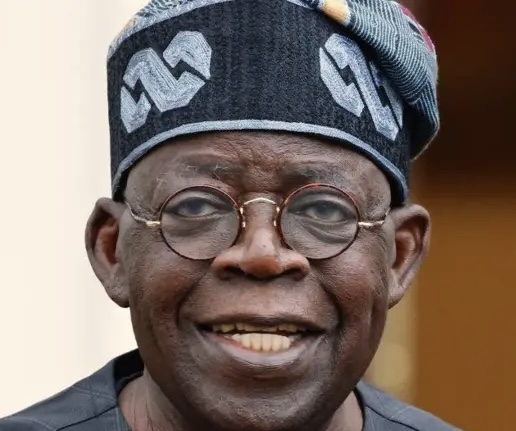
President Bola Tinubu on Tuesday declared that Nigeria will stop exporting raw cocoa beans.
The government, he said will instead push the crop through local processing plants, a move aimed at capturing more of the global chocolate industry’s value and boosting jobs and foreign earnings.
Speaking at the Cocoa Value Addition Summit in Abuja, President Tinubu — represented at the event by Agriculture Minister Abubakar Kyari — described the policy shift as a corrective to decades in which African producers supplied the world’s cocoa but earned only a sliver of the finished-product profits.
“Seven of every ten cocoa pods on this earth ripen under the African sun,” he said, adding that Nigeria would “grind our beans at home, press our butter at home, make our chocolate at home, brand it at home and sell it to the world on our own terms.”
Africa produces roughly 70% of the world’s cocoa, yet analysts say the continent captures a tiny portion of the sector’s value. Global chocolate sales are estimated at more than $130 billion, with some estimates approaching $165 billion, figures President Tinubu cited as the rationale for the government’s industrial push.
The summit, themed “From Bean to Brand,” brought together ministers, governors, financiers and private investors to unveil a roadmap for scaling domestic processing. Tinubu pointed to rising capacity: a 70,000‑ton processing facility is being built near Sagamu, and national grinding capacity has climbed past 120,000 tons, he said.
The Bank of Industry, a development lender, is positioned to fund bankable projects tied to the plan, he added.
Nigeria’s cocoa sector directly involves more than 300,000 farming families across some 1.4 million hectares and accounts for about 6%–7% of global output, the President said.
NewsQuest reports Cocoa generated more than N3 trillion in export earnings at peaks in global prices, contributing nearly a quarter of the country’s non‑oil exports in high‑price periods, according to government statements.
President Tinubu warned that exporting raw beans is no longer an acceptable development strategy.
“The reward of this harvest has been far from the hands that raise it,” he said, calling value addition “a covenant” with farmers and urging private investment in processing and branding on Nigerian soil.
The policy lines up with President Tinubu’s broader industrial agenda. John Owan Enoh, minister of state for industry, said the summit advances the Nigerian Industrial Policy goal of shifting the economy toward domestic manufacturing.
“We are not interested in exporting anonymous sacks anymore. We are interested in exporting value,” he added.
Dr. Olasupo Olusi, Chief Executive of the Bank of Industry, said the lender has provided significant credit to the food sector and plans dedicated financing windows for cocoa processing, ingredient manufacture, packaging and chocolate production.
The bank has disbursed across the food sector — the release cited more than N164 billion in 2025 to thousands of agro‑processing businesses — and recently secured a €60 million facility from the European Investment Bank to back cocoa projects.
Despite higher national output—Nigeria produces more than 300,000 tonnes of cocoa annually—the country’s effective grinding capacity lagged, the Bank of Industry said, at roughly 50,000 tonnes, leaving a gap investors hope to fill.
Reports indicate that Nigeria is pursuing closer collaboration with Ghana, Côte d’Ivoire and Cameroon, officials said, to form an African bloc capable of commanding about 75% of global cocoa production.
Ransford Abbey, Chief Executive Officer of Ghana’s Cocoa Board, urged deeper cooperation, calling current export patterns “a colonial economic structure” that leaves Africa with a small share of the chocolate market’s value.
