

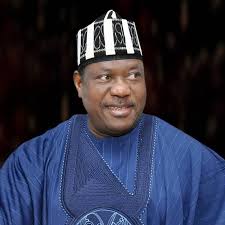
The Secretary to the Government of the Federation, Senator George Akume, has assured the Christian Association of Nigeria (CAN) that President Bola Tinubu is committed to promoting an equal sense of belonging for all Nigerians, regardless of their religious or ethnic affiliations.
Akume disclosed this during a meeting in Abuja with a delegation of Northern Christian Association of Nigeria (CAN) chairmen, led by Rev. Joseph Hayab.
He said the administration aims to build a country in which every Nigerian, regardless of faith or ethnic background, has an equal opportunity to contribute to national development.
Akume said merit, capacity and the ability to deliver results, not religious or tribal considerations remain the administration’s guiding principles for appointments and governance.
He pointed to the religious and ethnic composition of the Federal Executive Council (FEC) as evidence of the government’s effort to reflect Nigeria’s diversity.
“The government recognizes Nigeria’s diversity as a strength,” Akume said, according to a statement issued by his office.
He added that the administration wants citizens to feel represented and valued in national affairs.
The remarks come as the government continues to court religious and regional constituencies amid public concerns over economic hardship, insecurity and perceptions of unequal access to political opportunity.
Northern CAN leaders have previously called for greater Christian representation in senior government positions.
Akume also defended the administration’s economic agenda, citing road projects in Kaduna and Benue states and the Abuja-Kaduna-Kano and Sokoto-Badagry corridors as measures intended to improve connectivity, trade and economic activity.
On the economy, he highlighted an increase in foreign-exchange reserves to more than $55 billion and the Central Bank of Nigeria’s unification of foreign-exchange windows.
The government presents both steps as part of a broader effort to stabilize the naira, restore investor confidence and improve the business environment.
Akume said the removal of fuel subsidies created fiscal space for increased transfers to state and local governments, allowing lower tiers of government to direct more resources toward development priorities.
The subsidy removal has been one of the administration’s most consequential, and politically sensitive reforms.
The SGF cited new universities, student loans through the Nigerian Education Loan Fund (NELFUND) and investments in specialized health centers as evidence of the administration’s social-development agenda.
In agriculture, he said the government plans to open four million hectares of land for cultivation and build 10 new dams, part of a long-term effort to raise food output and strengthen food security by 2050.
Rev. Hayab said the delegation’s visit was intended to deepen engagement between the church and the federal government.
He pledged Northern CAN’s prayers, support and cooperation with the administration, while emphasizing the church’s role in promoting peace and national unity.
Akume said sustained dialogue with religious institutions is important to national cohesion, peace and mutual understanding, adding that the government would continue consulting faith-based organizations on national issues.
