

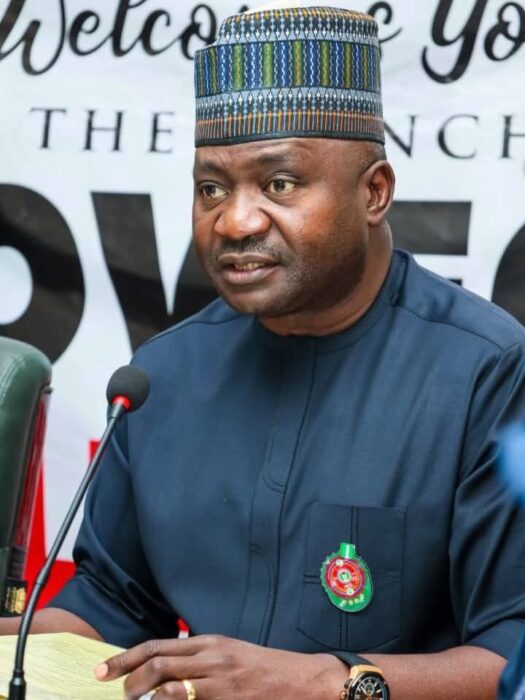
The Minister of Defence, General Christopher Musa (rtd.), has advocated the reintroduction of tollgates on highways, saying modern tolling technology could help security agencies identify and track criminals.
Musa made the call in Abuja at the roundtable, “Promise to Proof: The Renewed Hope Conversation,” organised by the All Progressives Congress (APC) Progressive Strategy Roundtable.
Responding to concerns over highway insecurity and a suggestion that motorists could pay security levies at tollgates.
The Minister described the return of tollgates as a good idea, noting that previous administrations may have erred by dismantling them.
He explained that, in many other countries, modern tolling systems identify vehicles through their registration numbers, with payments processed electronically without motorists stopping for manual collection.
Such systems, he said, could also assist security agencies in monitoring vehicle movement.
Musa also called for the strengthening of the identification system through the use of Personal Identification Numbers (PINs), facial recognition and fingerprints to improve security monitoring, make it easier to establish people’s identities and track criminal activities.
On the general security situation, the Minister said the Federal Government was making progress against terrorism, banditry and kidnapping through increased defence investment, improved intelligence gathering, joint military operations and stronger inter-agency cooperation.
He disclosed that the government allocated ₦5.4 trillion to defence in the 2026 budget and was recruiting an additional 12,000 military personnel to boost manpower and security coverage.
According to him, the government was also investing in modern weapons, surveillance systems and operational platforms to enhance intelligence gathering, mobility, firepower and rapid response.
He further revealed that security forces killed more than 300 terrorists and bandits, including over 10 commanders, in operations conducted in the week preceding the event.
The Minister identified porous borders as a major challenge, noting that Nigeria shares extensive borders with neighbouring countries, particularly Niger Republic, through which criminal groups and illicit arms move.
He said the government was strengthening border security and expanding bilateral, regional and international defence cooperation through intelligence sharing, specialised training and technological support.
Musa added that Nigeria had maintained security relations with Niger, Burkina Faso and Mali despite their withdrawal from ECOWAS, including military training and cooperation around border areas.
He warned that instability in the Sahel posed a serious threat to West Africa and urged regional countries to work together to prevent the collapse of neighbouring states.
The Minister also stressed the importance of local defence manufacturing, disclosing that the government had strengthened the country’s defence industry through legislative reforms and partnerships with equipment manufacturers.
He said Nigeria recently hosted the first African International Military Defence Exhibition, which attracted 63 countries and provided opportunities for local manufacturers to meet international partners and sign investment agreements.
According to him, domestic production of military equipment would reduce dependence on foreign suppliers, create employment and generate foreign exchange.
He called on Nigerians with expertise in defence-related fields to contribute to building a self-reliant defence industry.
