

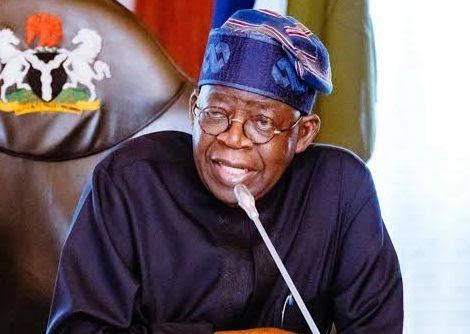
President Bola Tinubu has asked the National Assembly to approve a fresh external borrowing of $7.7 billion (about N10.79 trillion) to help finance the 2026 budget deficit, while withdrawing his earlier broader request for $20.52 billion and €1.045 billion in foreign loans made just last week.
The revised request, contained in a letter dated October 26, 2026 and read by Senate President Godswill Akpabio during Wednesday’s plenary, seeks authorization for $7,707,404,882.49—about N10.79 trillion at the budget exchange rate of N1,400 to the dollar.
Akpabio said the new letter effectively supersedes the earlier proposal because it is more explicit about financing sources and conditions.
The President said the funds would cover part of the external-borrowing component in the 2026 Appropriation Act, which authorizes N29.2 trillion in new borrowing against a projected budget deficit of about N31.4 trillion.
The plan allocates N18.4 trillion to domestic borrowing and N10.79 trillion to external financing.
Tinubu said the government would pursue several financing options simultaneously, with emphasis on Eurobonds because they can be completed relatively quickly and may raise larger amounts at comparatively lower cost.
Because the debt would be market-priced, final interest rates, tenors and repayment terms would be determined only when the instruments are issued.
The borrowing is intended to support projects in infrastructure, defense, agriculture, health care, power and education—sectors the administration says are central to consolidating its macroeconomic reforms.
Akpabio referred the proposal to the Senate Committees on Local and Foreign Debts and Appropriations, directing them to report back “as soon as practicable.”
The committees are expected to examine the financing structure, sources, repayment implications and other terms before the full chamber votes.
The request rests on Sections 21(1) and 27(1) of the Debt Management Office (Establishment, etc.) Act, 2003, which requires legislative approval for external borrowing arrangements.
While the country’s debt-to-GDP ratio remains moderate by some peer comparisons, multilateral lenders have warned that weak revenue collection and high debt-service costs constrain spending on infrastructure and public services.
The International Monetary Fund and World Bank have repeatedly urged Nigeria to strengthen revenue mobilization and direct borrowed funds toward investments capable of generating economic returns.
The government maintains that external financing is necessary to address an infrastructure deficit and fund development priorities.
The new request follows recent approvals including a $516.3 million Deutsche Bank facility for the Sokoto–Badagry Superhighway and, in March, a $6 billion external borrowing plan for budget support and port rehabilitation.
